跳到内容
跳到内容 
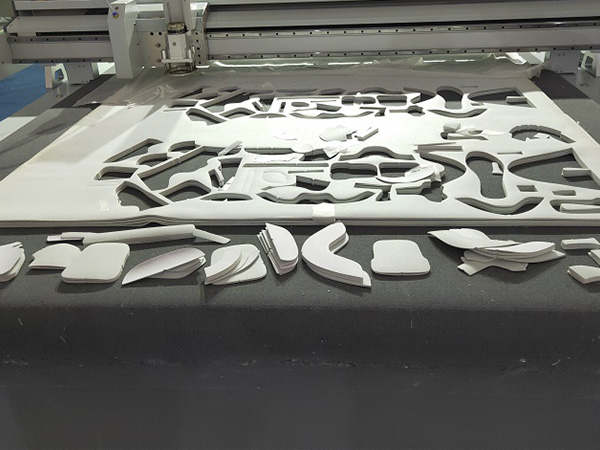
Leather orders changed. Molds are slow, labor is expensive, and customers still want delivery yesterday.
A CNC Leather Cutter is usually better for small batch and custom leather orders because it needs no cutting dies, supports irregular shapes, improves nesting efficiency, and reduces skilled labor dependence. Die cutting is still useful for very large repeated orders.
I often meet leather product manufacturers who ask the same question: should I keep using die cutting, or should I invest in a CNC Leather Cutter?
My answer is simple. I do not choose the machine first. I look at the order type first.
If the factory produces the same shoe part or bag part every day, and the quantity is huge, die cutting can still work well. But if the factory handles many styles, small batches, custom orders, irregular leather hides, or multi-layer PU leather cutting, CNC cutting becomes much more practical.
In the shoes and bags industry, the biggest challenge is not only cutting. The real challenge is changing orders quickly without wasting time, leather, and labor. That is where AMOR CNC leather cutting machines become valuable.
Why Is Die Cutting Still Used in the Leather Industry?
Die cutting looks old, but it is not useless. The problem is that many factories use it for the wrong order type.
Die cutting is suitable for high-volume repeated leather parts. It uses physical cutting molds to press and cut material. It is fast after the mold is ready, but every new design needs a new die.
Die Cutting Works Well When the Shape Never Changes
I do not like to attack traditional methods blindly. Die cutting has its own value. If a shoe factory cuts the same upper part for months, a cutting die can be efficient. The operator places the leather or PU sheet under the press. The die presses down. The shape is cut quickly.
This method works best when three conditions are true.
| Condition | Why It Matters |
|---|---|
| The order quantity is large | The mold cost can be shared across many pieces |
| The shape is fixed | The factory does not need to change dies often |
| The material is stable | The cutting result is easier to control |
But many modern leather factories do not live in this perfect world. A bag factory may receive 20 styles this week. A shoe factory may need sample development today and small batch production tomorrow. A furniture factory may cut irregular genuine leather with natural defects. In these cases, the mold becomes a problem.
A cutting die is fast only after it exists. Before that, the factory must design it, make it, test it, store it, and manage it. That process costs time and money.
The Mold Becomes a Hidden Cost
Many buyers only compare machine price. I think that is a mistake. In die cutting, the mold cost is not a small detail. It is a repeated cost.
Every new style needs a new mold. Every design change may need another mold. Every mold also needs space for storage. When the customer stops ordering that style, the mold may sit in the warehouse like an expensive souvenir.
For standard mass production, this may be acceptable. For custom leather products, it becomes a headache.
Why Is a CNC Leather Cutter Better for Small Batch Orders?
Small batch orders hate molds. CNC cutting does not need them.
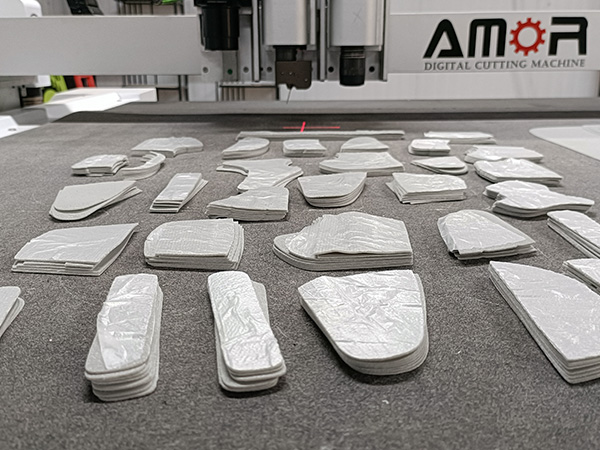
A CNC Leather Cutter cuts directly from digital files. It is suitable for small orders, frequent style changes, sample production, and custom leather shapes. The operator can change the cutting file instead of changing a physical die.
Digital Cutting Removes the Mold Step
The biggest advantage of a CNC leather cutter is simple: no cutting die is required.
The designer prepares the cutting file. The operator imports the file into the machine. The machine cuts the leather shape with an oscillating knife, rotary knife, or other suitable tool. If the customer changes the design, the operator changes the file.
This process is very useful for:
- Custom leather bags
- Small batch shoe uppers
- Sample development
- Personalized leather accessories
- Furniture leather parts
- PU leather product orders
- Repair and replacement leather parts
In real production, this saves more than mold cost. It also saves waiting time. If a mold takes several days to prepare, the CNC machine may start cutting as soon as the file is ready.
That difference is important when customers ask for fast delivery.
Small Batch Production Needs Flexibility More Than Raw Speed
Die cutting can be very fast for one fixed shape. But small batch production does not only need cutting speed. It needs changeover speed.
Let me explain it in a practical way.
Die Cutting:
Design → Make Mold → Test Mold → Cut → Store Mold

CNC Leather Cutter:
Design → Import File → Nest → Cut
For one large repeated order, die cutting may win in single-piece cutting speed. For many different shapes, CNC cutting usually wins in total production time.
This is why I always tell buyers to calculate the full process, not only the cutting moment. The machine is not only cutting material. It is also helping the factory react to orders.
How Does a CNC Leather Cutter Handle Irregular Genuine Leather?
Genuine leather is not a perfect rectangle. It has personality, defects, scars, and sometimes bad temper.
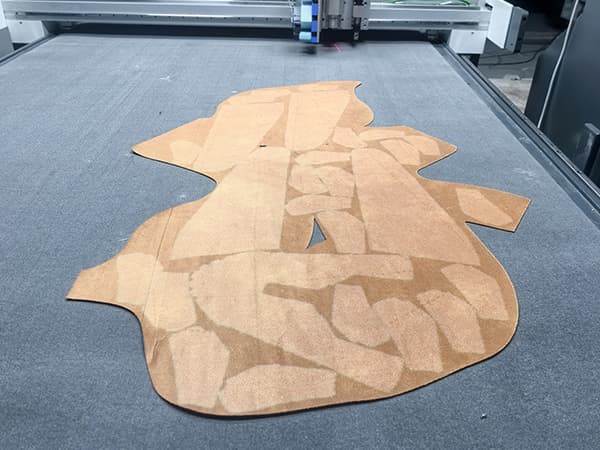
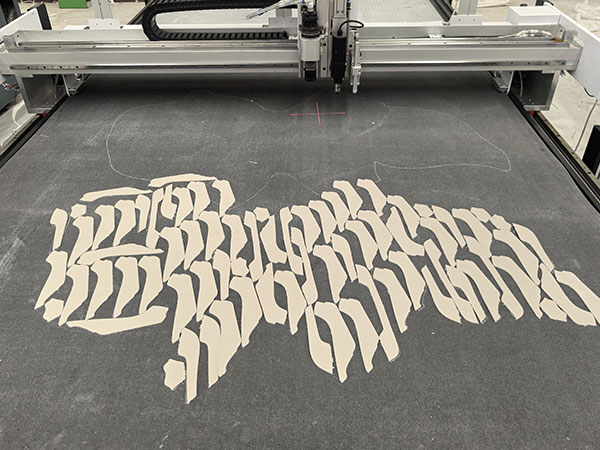
A CNC Leather Cutter can support irregular genuine leather cutting with camera scanning, projection, defect marking, and automatic nesting. This helps factories improve leather usage and reduce waste.
Genuine Leather Requires Smart Nesting
Natural leather hides are irregular. They have different shapes, textures, stretch directions, scars, holes, and color differences. If the worker nests parts by hand, the result depends heavily on experience.
A skilled worker may do a good job. But skilled workers are harder to find. They are also expensive. If the factory depends too much on one experienced worker, production becomes risky.
AMOR CNC leather cutting solutions can use visual scanning and nesting support for genuine leather. The system can help the operator arrange parts more efficiently on irregular hides. The operator can mark defective areas. The software can avoid those areas when arranging cutting pieces.
This does not mean the machine replaces all judgment. Leather still needs human checking. But the machine makes the process more stable.
Material Saving Is a Real Profit Point
Leather is expensive. If a factory saves even a small percentage of material, the yearly cost difference can be large.
For example, if a factory uses $50,000 worth of leather each month, a 5% material saving means $2,500 saved each month. In one year, that is $30,000. This is not a small number.
Monthly Leather Cost:     $50,000
5% Material Saving:        $2,500 / month
Yearly Saving:            $30,000 / year
This is why nesting matters. It is not a nice software function. It directly affects profit.
Visual Workflow for Irregular Leather
Scan Hide → Mark Defects → Auto Nest → Project Layout → Cut PartsThis workflow is much more practical than manual chalk drawing and hand cutting. It also reduces mistakes when many different parts need to be placed on one hide.
For genuine leather bag and shoe production, this is one of the strongest reasons to choose a CNC solution.
Can a CNC Leather Cutter Cut Multi-Layer PU Leather?
PU leather is more regular than genuine leather, but it brings another challenge: production volume.
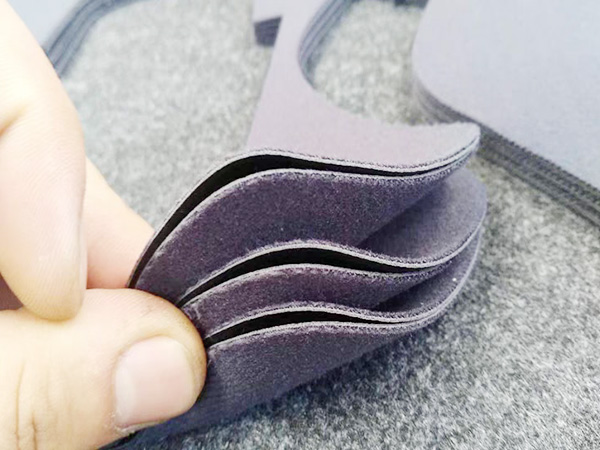
A CNC Leather Cutter can cut multi-layer PU artificial leather with the right tool, vacuum fixing, and material feeding system. This is useful for bags, shoes, upholstery, and other soft material production.
PU Leather Is Suitable for Layered Cutting
Unlike genuine leather, PU leather usually comes in rolls or sheets. It has a more regular shape. It often has fewer natural defects. This makes it suitable for multi-layer cutting.
For example, in bag and shoe production, factories may need to cut many repeated PU parts. If the material is stable and the pattern is not too complex, layered cutting can improve output.
AMOR CNC machines can be configured with suitable tools for PU leather cutting. For many PU leather jobs, an oscillating cutting tool can cut clean edges. If the material is thin and flexible, a rotary wheel tool can also be considered. The right choice depends on the material thickness, layer number, hardness, and edge requirement.
Layered Cutting Needs Stable Fixing
Cutting several layers is not just about knife strength. The material must stay stable. If the upper layer moves, the final size will be wrong. If the bottom layer shifts, the whole stack may become waste.
That is why vacuum adsorption, table flatness, and tool movement matter. The machine must hold the material well and cut with balanced force.
Here is a simple comparison.
| Material Type | Common Cutting Method | Key Concern |
|---|---|---|
| Genuine leather | Single-layer scanning and nesting | Defects and irregular hide shape |
| PU leather | Multi-layer cutting | Layer stability and edge consistency |
| Sofa leather | Large-format cutting | Material width and nesting |
| Shoe material | Cutting + punching + marking | Accuracy and production flow |
The Tool Must Match the Material
Many cutting problems come from wrong tool selection. If the blade is not suitable, the edge may pull, stretch, or leave rough marks.
For PU leather, I usually check:
- Material thickness
- Layer number
- Surface coating
- Backing material
- Pattern complexity
- Hole size
- Edge quality requirement
Only after that do I recommend the tool. A good CNC leather cutter is not one fixed knife. It is a flexible cutting system.
How Does CNC Cutting Reduce Dependence on Skilled Workers?
Manual cutting depends on people. CNC cutting depends on a stable process.
A CNC Leather Cutter reduces the need for highly skilled manual cutters because the machine follows digital files, uses automatic nesting, and repeats cutting paths with stable accuracy.
Manual Cutting Is Hard to Standardize
In many leather factories, experienced workers are valuable. They know how to place patterns. They know how to avoid defects. They know how to control the knife.
But there is a problem. Their skill is difficult to copy.
If one skilled worker leaves, the factory loses experience. If new workers join, training takes time. If the order is urgent, manual mistakes increase.
A CNC leather cutter helps solve this problem. The operator does not need to cut every shape by hand. The machine follows the cutting path. The software helps with nesting. The system makes production easier to repeat.
The Operator Still Matters
I do not want to make the machine sound like magic. The operator still matters. The operator must load material, choose tools, check the file, set cutting depth, and inspect the result.
But the required skill changes. The worker no longer needs to be a master hand cutter. The worker needs to understand machine operation and basic production control.
This is easier to train and easier to manage.
Production Becomes More Stable
With CNC cutting, the factory can reduce variation between workers. The first piece and the 100th piece can stay more consistent. This is important for shoes and bags because small size errors can affect sewing and assembly.
Here is a simple view.
Manual Cutting Stability:     ██████
Die Cutting Stability:        ████████
CNC Cutting Stability:        █████████
Order Flexibility:
Manual Cutting:               ███████
Die Cutting:                  ███
CNC Cutting:                  ██████████
The CNC method gives a better balance between stability and flexibility. That balance is very useful for custom orders.
Which Method Saves More Time in Custom Leather Orders?
The fastest cutting method is not always the fastest production method.
For custom leather orders, a CNC Leather Cutter often saves more total time because it removes mold making, shortens changeover, supports automatic nesting, and handles different shapes quickly.
Die Cutting Has a Delay Before Cutting
Die cutting can press one shape very fast. But before cutting, the mold must be made. For standard repeat orders, this delay may not matter. For custom orders, it matters a lot.
If the customer wants 30 sets of a new bag style, making a mold may not be worth it. If the design changes after sampling, the old mold may become useless.
CNC cutting avoids this delay. The machine can cut after the file is prepared and checked.
CNC Cutting Is Faster for Style Changes
In the shoes and bags industry, style changes are normal. A factory may cut one shape in the morning and another shape in the afternoon. With die cutting, the worker changes molds. With CNC cutting, the operator changes the digital file.
This gives the factory better reaction speed.
| Production Situation | Better Choice | Reason |
|---|---|---|
| 10,000 identical pieces | Die cutting | Mold cost is shared |
| 50 custom leather pieces | CNC leather cutter | No mold needed |
| Sample development | CNC leather cutter | Fast file change |
| Irregular genuine leather | CNC leather cutter | Better nesting and defect avoidance |
| Multi-layer PU leather | CNC leather cutter | Flexible batch cutting |
| Fixed long-term shoe part | Die cutting or CNC | Depends on cost and process |
The Real Question Is Order Structure
I always ask customers one question: how often do your designs change?
If the answer is “almost never,” die cutting may still be enough. If the answer is “every week,” then a CNC leather cutter is much more suitable.
This question is more useful than asking only about machine price.
What Should Buyers Check Before Choosing a CNC Leather Cutter?
A leather cutting machine should fit the factory, not just the brochure.
Before buying a CNC Leather Cutter, buyers should check material type, working size, tool configuration, nesting software, vacuum system, cutting accuracy, and after-sales support.
Check the Material First
Leather is not one material. Genuine leather, PU leather, microfiber leather, sofa leather, shoe material, and bag material all behave differently.
I usually ask customers to send material samples. I also ask for the product type and cutting drawing. This is the safest way to recommend the machine.
For example, genuine leather needs vision scanning and nesting support. Multi-layer PU leather needs stable adsorption and suitable cutting force. Shoe materials may need punching and marking. Bag materials may need large-format cutting and clean edges.
Check the Tool Configuration
A suitable AMOR CNC leather cutting machine can be configured with different tools.
| Function | Tool Option | Application |
|---|---|---|
| Contour cutting | Oscillating knife / rotary wheel tool | Leather parts, PU parts, fabric-backed leather |
| Hole making | Punching tool | Shoe uppers, bag parts |
| Line marking | Marking tool | Sewing lines and assembly marks |
| Nesting support | Software + projection | Genuine leather layout |
| Roll material cutting | Feeding system | PU leather and synthetic leather |
The machine should not only cut the outside shape. It should support the full production process as much as possible.
Check Real Sample Cutting
A sample test is more useful than any promise. I prefer testing real customer material before final machine selection.
The buyer should check:
- Edge smoothness
- Cutting accuracy
- Small hole quality
- Layer shifting
- Material waste
- Nesting result
- Operation difficulty
If the test result is good, the buyer can make a more confident decision.
Is AMOR CNC Leather Cutter Suitable for Your Factory?
A good machine should solve your production problem, not decorate your workshop.
AMOR CNC leather cutting machines are suitable for factories that need flexible cutting, no-mold production, automatic nesting, irregular genuine leather processing, and multi-layer PU leather cutting.
AMOR CNC Focuses on Practical Leather Production
At AMOR CNC, I do not want to sell one machine to every customer with the same speech. Different factories need different solutions.
For genuine leather bag factories, I focus on visual scanning, defect marking, projection, and nesting. For PU leather factories, I focus on layered cutting, feeding, tool selection, and cutting speed. For shoe material factories, I focus on cutting, punching, marking, and repeat accuracy.
This is because leather production is not one simple process. It is a chain.
Material Check → File Preparation → Nesting → Fixing → Cutting → Marking/Punching → CollectionIf one part is weak, the full process becomes slow.
AMOR CNC Helps Buyers Move from Mold Thinking to Digital Thinking
Many factories know die cutting very well. They understand molds. They understand presses. But digital cutting is different.
The value of a CNC leather cutter is not only that it cuts. The value is that it changes the way orders are produced.
The factory can accept more custom orders. The factory can test new designs faster. The factory can reduce mold storage. The factory can reduce dependence on master cutters. The factory can improve material usage through nesting.
This is why CNC cutting is not only a machine upgrade. It is also a production method upgrade.
The Best Choice Depends on Your Order Type
I would not say CNC cutting replaces die cutting in every factory. That would not be honest.
If your factory produces one shape in very large volume for a long time, die cutting can still be a strong option. If your factory handles many styles, irregular leather, small batches, customized products, and frequent design changes, an AMOR CNC leather cutter is usually the better choice.
That is the real difference.