跳到内容
跳到内容 
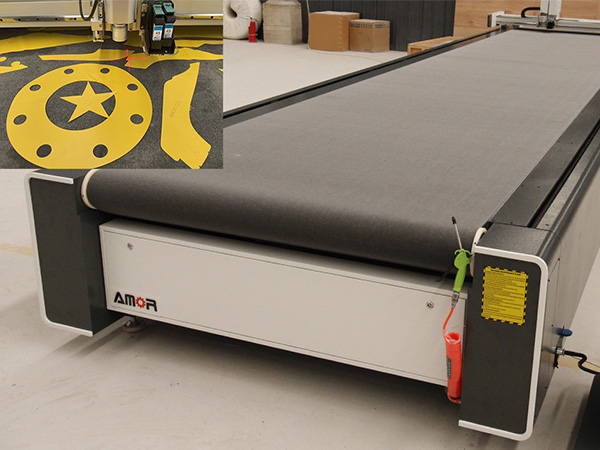
Bad cuts waste fabric. Slow cutting delays delivery.
I choose a PVC coated fabric cutting machine by checking table length, feeding method, tool setup, vacuum hold-down, and transmission structure. For tents, tarpaulins, greenhouse covers, cargo covers, and outdoor covers, a long table with automatic feeding and stable cutting is the practical choice.
When I talk with buyers in the tent and outdoor cover business, I find that many of them focus on price first. I understand that. But for PVC coated fabric cutting, the real cost often comes later. A short table, weak hold-down, or unstable transmission can turn a simple cutting job into daily trouble. That is why I always tell buyers to stop looking only at the machine photo and start looking at the cutting logic. Once I do that, the right machine becomes much easier to choose.
Why does machine length matter so much for PVC coated fabric cutting?
Short tables break long jobs. Repositioning adds error and waste.
For tents, tarpaulins, greenhouse covers, and cargo covers, I usually recommend an effective cutting length of 7 to 10 meters. That size can support one-time cutting for extra-long parts and also support continuous cutting from roll material with an automatic feeding system.

Why I do not like short tables for long PVC jobs
When I cut long PVC coated fabric pieces, table length changes everything. Many outdoor cover products are not small. Tent wall panels, side curtains, long tarpaulin strips, greenhouse roof covers, and truck cover parts often need long and straight cutting paths. If the machine is too short, I have to stop, reposition the fabric, align it again, and continue cutting. That sounds simple, but it creates three direct problems.
1. Repositioning lowers accuracy
Each time I move the material, I add a new chance for deviation. Even a 2–3 mm shift becomes obvious on long seams, welding edges, or eyelet positions.
2. Labor time goes up
If I need two or three positioning steps for one part, my operator loses time. On repeated jobs, this time loss becomes serious.
3. Material waste increases
PVC coated fabric is not cheap. If a long panel goes wrong near the final section, the whole part may become useless.
That is why I usually suggest this simple logic:
| Product type | Common machine choice |
|---|---|
| Small outdoor covers | Standard flatbed can work |
| Long tarpaulins | 7m+ effective cutting length |
| Tent panels and side curtains | 7–10m effective cutting length |
| Roll-fed continuous production | Long table + automatic feeding |
I prefer a machine that solves long-part cutting in one pass when possible. In my view, that is not a luxury feature. It is a production feature.
Why is automatic feeding important for PVC coated fabric rolls?
Manual pulling looks cheap. It usually becomes expensive.
If I work with rolled PVC coated fabric, I prefer an automatic feeding system. It helps me cut long pieces continuously, reduce manual handling, and keep material tension more stable during production.
Why I see feeding systems as a production tool, not an option
Many PVC coated fabric buyers work with rolls, not sheets. That is true for tarpaulin material, awning fabric, truck cover fabric, and many coated outdoor textiles. In this case, I do not want my operator to drag heavy material by hand again and again. Manual feeding may work for a sample room, but it is not a good answer for batch production.
What automatic feeding really changes
Continuous cutting
A feeding system lets me process the roll step by step. I can cut one section, feed the next section forward, and continue. This method fits repeated production much better.
Better surface control
PVC coated fabric has weight. Some materials also have surface friction. Manual pulling can cause skew, wrinkles, and edge drift. Automatic feeding gives me a more stable forward movement.
Lower labor pressure
One operator can do more. That matters when labor cost rises and delivery time becomes tighter.
I often explain it like this:
Without feeding:
Roll handling → manual pull → reposition → check alignment → cutWith feeding:
Roll loading → auto advance → align → cut continuously
This is simple, but it changes output. In many factories, a better workflow matters as much as raw cutting speed.
For most PVC coated fabric jobs, I recommend a machine width based on actual material width. 1600 mm effective width is a common choice. It fits many coated fabric applications well. But I also know that some buyers use wider materials, so custom width is often the better answer than forcing a standard model.
Which tool combination is best for PVC coated fabric cutting?
Wrong tools cause dragging, rough edges, and weak efficiency.
For PVC coated fabric, I usually recommend an electric oscillating cutting tool plus a marking tool. This combination handles clean cutting and line marking in one workflow, which is useful for sewing, welding, folding, and hole position guidance.

Why I like this tool setup for tents and tarpaulins
PVC coated fabric is tough, flexible, and often thick enough to challenge simple knife systems. It can also stretch or move if the tool is not matched well. I do not like tool choices that look cheap but create edge pull, fabric dragging, or inaccurate corners.
My preferred practical setup
Electric oscillating cutting tool
I use this tool because it gives stable cutting on coated technical textiles. The up-and-down oscillating action reduces drag during cutting. That helps the blade move through the material more cleanly than a simple passive knife in many PVC jobs.
Marking tool
I also like to add a marking tool. This is useful for seam lines, fold lines, welding guides, position marks, and assembly reference points. In many tent and cover jobs, marking is not extra work. It is part of the process.
Why the combination matters
If I cut first and mark later by hand, I add labor and I add error. If I mark and cut on the same machine, I simplify the workflow. That makes production more repeatable.
Here is the simple comparison I often use:
| Function | Why it matters in PVC fabric production |
|---|---|
| Oscillating cutting | Reduces drag and supports cleaner cutting |
| Marking | Helps sewing, welding, folding, and assembly |
| Combined workflow | Saves labor and lowers positioning error |
In many factories, buyers only ask, “Can it cut?” I think that question is too small. I ask, “Can it cut and support the next step well?” That is the better machine question.
How important is vacuum hold-down for PVC coated fabric?
If material moves, precision disappears.
I usually recommend 8 to 16 vacuum zones for PVC coated fabric cutting machines. Zoned vacuum hold-down helps me fix different material sizes better, reduce movement during cutting, and improve stability across a long working table.

Why I care about zoning more than simple vacuum power
Some buyers ask me only about vacuum pump power. Pump power matters, of course. But zoning matters too. If the table is long, and especially if it is 7 to 10 meters, vacuum control becomes more important.
A long cutting table without zoning can waste suction on unused areas. That reduces hold-down efficiency where I actually need it. Zoned adsorption helps me focus suction in the active cutting area.
My practical view on zone count
- 8 zones: a good baseline for many PVC fabric cutting jobs
- 12 to 16 zones: better for long tables, mixed part sizes, and flexible production
Why this matters in real work
Better material fixing
PVC coated fabric may look flat, but long pieces can still shift during rapid tool movement.
Better use of table area
When I cut smaller batches or partial widths, I can open only the needed zones.
More stable long-part cutting
On long parts, stable hold-down helps keep lines straight and reduces the chance of local lifting.
I often tell customers that cutting precision is not only about servo motors and software. It also depends on whether the material stays where it should stay. If the material moves, the machine cannot save the job.
Why do I recommend rack transmission instead of belt transmission?
Long travel needs strong transmission. Belt systems are not my first choice here.
For long-format PVC coated fabric cutting machines, I recommend rack and pinion transmission. On a 7–10 meter machine, rack transmission gives better stability, better force transmission, and better long-distance reliability than belt drive.

Why transmission structure should match machine length
I see many buyers focus on tool and table size, but ignore transmission. For short travel, some systems can still work acceptably with simpler structures. But when I move into long-format cutting, I want stronger mechanical support.
My reason is simple
Long travel increases load
A longer gantry travel means more demand on motion stability.
PVC work needs repeatability
Tent panels, cargo covers, and outdoor covers often involve repeated long cuts. These cuts need consistent motion from one end of the table to the other.
Belt systems have clear limits in long travel
On very long machines, belt drive can face tension change, wear, and long-term accuracy issues more easily. That is why I do not see it as the best choice for this application.
Why I prefer rack transmission
- It suits long travel better
- It supports stronger and more stable movement
- It matches industrial production better
- It gives me more confidence over time
Here is a simple visual summary:
Machine Length Demand
█  Short table → basic transmission may work
███ Medium table → stronger structure is better
█████ 7–10m table → rack transmission is the safer choice
I do not choose rack transmission because it sounds premium. I choose it because long-format PVC cutting needs it.
What machine width and layout should I choose for my application?
Wrong width wastes money. Wrong layout limits production.
I usually choose machine width based on actual fabric width and finished part size. For many PVC coated fabric jobs, 1600 mm effective width is a common and practical choice. But custom width is often the smarter choice if the material roll is wider or the product layout needs more space.
Why I do not believe in one fixed width for all buyers
A machine should match the material, not the other way around. I always start from three points:
1. Actual roll width
If my fabric roll is near the working width limit, feeding and edge control become harder.
2. Product nesting needs
Even if the material width fits, the part layout may waste space if the table is too narrow.
3. Future production growth
If I already know that wider material or new product lines may come later, I prefer to think ahead.
I often give buyers this simple selection guide:
| Material / production situation | Suggested thinking |
|---|---|
| Regular PVC rolls around common width | 1600 mm effective width is often enough |
| Wider outdoor cover materials | Consider custom width |
| Mixed product sizes and large panels | Leave nesting margin |
| Future product expansion | Avoid choosing too narrow |
A machine that is too wide can raise cost. A machine that is too narrow can block future orders. I try to avoid both mistakes.
Conclusion
For PVC coated fabric cutting, I choose long length, auto feeding, oscillating cutting, marking, zoned vacuum, and rack transmission.