跳到内容
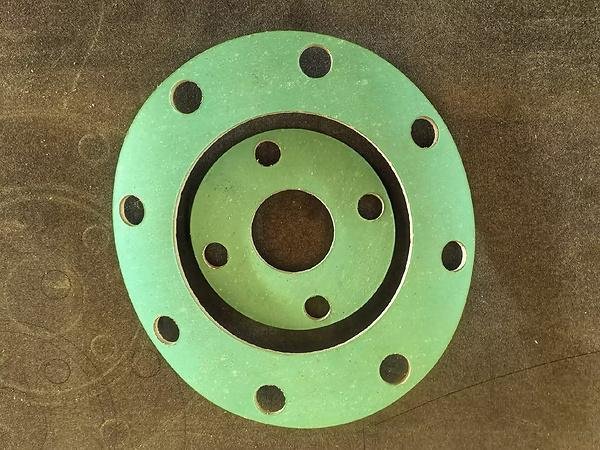
Warped gasket sheets can cause poor cutting accuracy, material waste, and production delays. High material stiffness and moisture can make these problems even harder to control.
A reliable CNC Gasket Cutting Machine should combine a Rolling Plastic Cover System with a multi-zone vacuum adsorption system to hold warped gasket sheets flat and stable during cutting.

When I communicate with gasket manufacturers, I often find that material deformation is a common problem during CNC cutting. Some gasket sheets are too rigid to lie flat on the working table. Others become warped because of moisture absorption or improper storage. These problems can affect cutting accuracy, especially when manufacturers need to produce gaskets with small holes, narrow edges, and complex shapes.
Many buyers initially focus on cutting tools, machine power, and cutting speed. However, I believe that material fixation is just as important. Even a high-precision cutting tool cannot produce consistent results if the material moves or lifts during processing.
At AMOR CNC, we developed our own Rolling Plastic Cover System to address this problem. When this system works together with our multi-zone vacuum adsorption system, it helps hold gasket sheets against the working table and maintain stable material positioning during cutting.
In this article, I will explain why gasket materials become warped, how this problem affects CNC cutting, and how our machine design helps manufacturers achieve more stable cutting results.
1. Why Do Gasket Materials Become Warped Before CNC Cutting?
Have you ever placed a gasket sheet on a cutting table and found that its edges keep lifting? This problem can make accurate cutting difficult.
Gasket materials can become warped because of high material stiffness, moisture absorption, improper storage, or internal material stress.
How Does High Material Stiffness Cause Gasket Sheets to Lift?
Some gasket materials have high stiffness and strong elastic recovery. When operators place these sheets on a flat working table, the edges may remain lifted instead of making full contact with the surface.
This problem is common with certain reinforced gasket sheets and dense materials.
For example, a relatively rigid non-asbestos gasket sheet may return to its original curved shape even after an operator presses it down manually. The material can also lift again when the operator releases the pressure.
This condition creates several problems during CNC cutting:
- The material may not stay in the correct position.
- The cutting blade may not contact the material consistently.
- Small gasket features may have dimensional deviations.
- The material may move when the cutting tool changes direction.
- The finished gasket may have inconsistent dimensions.
I believe that manufacturers should pay close attention to material stiffness before choosing a cutting machine. A machine needs a suitable fixation system to handle materials that naturally resist lying flat.
How Does Moisture Cause Gasket Material Deformation?
Moisture is another important cause of gasket sheet deformation.
Some non-asbestos gasket materials contain fibers and other components that can absorb moisture. When the material absorbs water, its dimensions and internal structure may change.
Uneven moisture absorption can also cause different areas of a sheet to expand at different rates. This condition may lead to bending, curling, or local deformation.
Improper storage can make the problem worse. For example, gasket sheets stored in damp environments or placed directly on wet floors may absorb moisture over time.
Different materials have different moisture responses. Manufacturers should not assume that rubber, PTFE, flexible graphite, and non-asbestos sheets behave in the same way.
Why Is Material Storage Important Before Cutting?
Material preparation is the first step toward stable CNC processing.
I recommend that manufacturers store gasket sheets in a dry environment and keep them properly supported. Operators should also inspect material flatness before placing sheets on the machine.
If a sheet has absorbed too much moisture or has developed permanent deformation, the manufacturer should evaluate its condition before cutting. A vacuum system can help hold the material during processing, but it cannot reverse moisture-related dimensional changes or repair permanently damaged material.
2. How Does Material Warping Affect CNC Gasket Cutting Accuracy?
A warped gasket sheet does not make full contact with the working table. This condition can affect the entire cutting process.
Even a small lifted area can cause problems when the machine cuts narrow gasket profiles, small holes, or complex contours.

Why Does Material Lifting Affect Cutting Quality?
When a gasket sheet lifts from the working table, the material may move under the force of the cutting blade.
The machine follows the programmed cutting path, but the material may not remain in its original position. This difference between the programmed path and the actual material position can cause dimensional errors.
For example, a customer may need to cut a gasket with several small bolt holes. If the sheet moves during processing, the holes may not remain in their intended positions.
Material lifting can also affect the cutting depth and the contact between the blade and the sheet.
What Problems Can Occur During Production?
I usually advise customers to check the following issues when they experience unstable cutting results:
| Material Problem | Possible Cutting Result |
|---|---|
| Lifted sheet edges | Material movement and positioning errors |
| Local material deformation | Inconsistent cutting depth |
| Strong elastic recovery | Material lifting during processing |
| Uneven material surface | Unstable blade contact |
| Poor vacuum fixation | Reduced cutting consistency |
These problems can increase scrap rates and create additional work for operators.
I believe that manufacturers should solve material fixation problems before they spend time adjusting cutting speed or replacing cutting tools. Otherwise, they may keep changing cutting parameters without addressing the real cause.
3. How Does AMOR CNC’s Rolling Plastic Cover System Prevent Material Lifting?
Traditional vacuum adsorption may not provide enough holding force for certain porous or highly rigid gasket materials.
AMOR CNC independently developed the Rolling Plastic Cover System to improve material fixation during CNC cutting.
This system works together with the vacuum adsorption system to help hold gasket sheets flat against the working table.

What Is the Rolling Plastic Cover System?
The Rolling Plastic Cover System is an independently developed material fixation solution from AMOR CNC.
The system uses a rolling plastic cover to cover the material during processing. The cover helps reduce air leakage through exposed porous areas and improves the effectiveness of vacuum adsorption.
This design is especially useful when manufacturers process materials that are difficult to fix with conventional vacuum adsorption alone.
The working principle is simple:
- The operator places the gasket sheet on the CNC working table.
- The rolling plastic cover is positioned over the material.
- The vacuum adsorption system creates negative pressure beneath the material.
- The cover helps reduce unnecessary air leakage.
- The combined system helps hold the gasket sheet against the working surface during cutting.
The system helps improve material contact with the working table and reduces the risk of material movement.
How Does the System Help with High-Stiffness Gasket Sheets?
High-stiffness materials often have strong elastic recovery. Their edges may lift even when operators press them down manually.
The Rolling Plastic Cover System helps the vacuum adsorption system hold these materials more effectively.
When the vacuum system creates sufficient holding force, the material can remain closer to the working table during processing.
This is important for manufacturers who cut reinforced non-asbestos sheets and other relatively rigid gasket materials.
I recommend testing the actual material before confirming the final machine configuration. Material thickness, stiffness, surface condition, and deformation level can all affect the fixation result.
How Does the System Help with Moisture-Related Warping?
Moisture-related deformation can also cause gasket sheets to lift from the working table.
The Rolling Plastic Cover System helps improve the contact between the material and the vacuum table. The vacuum adsorption system then helps maintain the material position during cutting.
However, I want to make one point clear: the system does not remove moisture from gasket materials or reverse permanent deformation.
Manufacturers should still store their materials properly and allow moisture-sensitive sheets to stabilize before processing.
The main purpose of our system is to improve material fixation during CNC cutting, not to repair damaged materials.
4. Why Is a Multi-Zone Vacuum Adsorption System Important for Gasket Cutting?
A Rolling Plastic Cover System works best when it is combined with a suitable vacuum adsorption system.
A powerful vacuum pump alone does not guarantee stable material fixation. The machine also needs a suitable vacuum layout and effective sealing.
AMOR CNC uses a multi-zone vacuum adsorption design to help manufacturers fix different sheet sizes and improve material holding performance.

How Does Multi-Zone Vacuum Adsorption Work?
A multi-zone vacuum table divides the working surface into several independent adsorption areas.
Operators can activate the zones that match the material size and cutting area.
For example, when a manufacturer cuts a small gasket sheet on a large working table, the operator does not need to use every vacuum zone. The operator can select the required areas to focus the available vacuum adsorption on the working material.
This arrangement helps reduce unnecessary air leakage from unused areas.
When the Rolling Plastic Cover System is used together with the vacuum zones, the combined design helps maintain more stable adsorption.
Why Is Vacuum Distribution Important for Warped Materials?
Warped sheets do not always have uniform contact with the working table.
Some areas may touch the table, while other areas may have gaps. These gaps can allow air to enter the vacuum system and reduce the effective holding force.
The Rolling Plastic Cover System helps address this issue by covering exposed areas and reducing air leakage.
The multi-zone design also allows operators to select the appropriate adsorption areas according to the material dimensions.
I believe that these two functions should be evaluated together rather than separately.
What Are the Advantages of Combining These Two Systems?
| Machine Feature | Main Function | Benefit |
|---|---|---|
| Rolling Plastic Cover System | Helps reduce air leakage | Improves material fixation |
| Multi-Zone Vacuum Table | Controls active adsorption areas | Supports different sheet sizes |
| Flat Working Table | Provides a stable reference surface | Helps maintain processing consistency |
| Combined System | Improves contact between material and table | Reduces material movement during cutting |
This combination is especially useful for gasket manufacturers who frequently process sheets with curled edges, high stiffness, or porous structures.
5. How Does a Flat Working Table Improve Gasket Cutting Accuracy?
Material fixation is not the only factor that affects cutting accuracy. The working table itself also plays an important role.
An uneven working surface can affect material contact and the relationship between the cutting tool and the material.
A highly flat working table provides a stable reference surface for CNC gasket cutting.

Why Does Working Table Flatness Matter?
When a gasket sheet is fixed on the working table, the material should have stable contact with the surface.
If the table has uneven areas, the material may not be supported consistently. This condition can affect cutting depth and processing results.
The problem becomes more important when manufacturers produce gaskets with small holes, narrow contours, and complex designs.
At AMOR CNC, we pay close attention to working table flatness because we understand its importance in material fixation and cutting consistency.
How Does Table Flatness Work with Vacuum Adsorption?
A flat working table provides a stable surface, while the vacuum system provides the holding force.
These two functions support each other.
The working table provides the reference surface. The vacuum adsorption system helps hold the material against that surface. The Rolling Plastic Cover System further helps improve adsorption for materials that are difficult to fix.
I recommend that buyers check all three factors when evaluating a CNC Gasket Cutting Machine:
- Working table flatness.
- Vacuum adsorption performance.
- Material fixation performance with actual gasket sheets.
A machine with suitable cutting tools but poor material support may not achieve the expected processing results.
6. How Should You Choose the Right CNC Gasket Cutting Machine for Warped Materials?
Different gasket manufacturers work with different materials, thicknesses, and production requirements.
I do not recommend choosing a machine based only on its vacuum pump power or advertised cutting accuracy. Buyers should evaluate the complete machine configuration with their actual materials.

Evaluate Your Material Characteristics First
Before selecting a machine, I suggest confirming the following information:
- Material type, such as non-asbestos, rubber, PTFE, or flexible graphite.
- Material thickness and density.
- Material hardness and stiffness.
- Whether the sheet has curled edges or local deformation.
- Whether the material is porous or moisture-sensitive.
- The required cutting dimensions and production volume.
These details help us understand the actual fixation challenges and recommend suitable machine configurations.
Check the Complete Material Fixation System
I recommend that buyers pay attention to more than the vacuum pump specification.
The complete fixation system should include a suitable working table, vacuum zones, and an appropriate cover solution when necessary.
The buyer should also test whether the machine can hold the actual material securely during cutting.
Why Is Actual Material Testing Important?
A technical specification cannot fully show how a machine performs with a particular gasket sheet.
For example, two non-asbestos gasket sheets may have the same thickness but different stiffness and air permeability. Their adsorption performance may also be different.
At AMOR CNC, I encourage customers to send us their actual materials for testing.
Our team can evaluate the material condition, test the fixation system, and recommend suitable cutting tools and parameters.
This approach helps customers understand the machine’s actual performance before making an investment.
7. Why Choose AMOR CNC for Gasket Material Cutting?
A suitable CNC Gasket Cutting Machine should provide more than cutting accuracy. It should also solve material fixation problems and support stable production over the long term.
At AMOR CNC, we focus on these practical requirements when developing our gasket cutting solutions.

Our Independently Developed Rolling Plastic Cover System
Our Rolling Plastic Cover System is designed to help improve the fixation of difficult-to-hold gasket materials.
When combined with multi-zone vacuum adsorption, the system helps reduce air leakage and hold material against the working table.
This solution is particularly useful for certain high-stiffness and porous gasket sheets that tend to lift during processing.
A Highly Flat Working Table and Multi-Zone Vacuum Adsorption
We pay attention to working table flatness and vacuum adsorption because both features affect material stability.
Our machine configuration helps customers fix different gasket sheet sizes and maintain stable material positioning during cutting.
The combination of the Rolling Plastic Cover System, vacuum zones, and a flat working table provides a practical solution for difficult material fixation requirements.
Practical Technical Support Based on Real Applications
I believe that a machine supplier should understand the materials that customers process.
Different gasket sheets may require different fixation methods, cutting tools, and operating parameters.
At AMOR CNC, we use our experience in gasket cutting applications to help customers evaluate their materials and choose suitable machine configurations.
We can also provide sample cutting tests to check material fixation, cutting quality, and processing performance before the customer confirms an order.
Our goal is not simply to sell a machine. We want to help customers build a stable and efficient gasket production process.
8. Conclusion: How Can You Prevent Gasket Material Warping During CNC Cutting?
Use proper material preparation, a highly flat working table, and AMOR CNC’s Rolling Plastic Cover System with multi-zone vacuum adsorption to improve material fixation and cutting stability.If you are looking for a high-quality gasket cutting machine that suits your needs, please contact us.