跳到内容


Are high labor costs, fabric waste, and slow cutting processes limiting your sofa production? Traditional cutting methods may be holding your factory back.
An Automatic CNC Sofa Fabric Cutting Machine reduces manual work through digital pattern scanning, automatic nesting, and continuous fabric feeding. It helps sofa manufacturers save labor, reduce fabric costs, and improve production efficiency.
At AMOR CNC, we understand the daily challenges of sofa manufacturers. Traditional fabric cutting requires workers to prepare paper patterns, arrange fabric pieces, and spread fabric by hand. These tasks take time and depend heavily on worker experience. Factories also face rising labor costs and pressure to complete more orders in less time.
An automatic CNC sofa fabric cutting machine can change this production process. It combines digital pattern management, intelligent nesting software, and an automatic fabric feeding correction system. These features reduce repetitive manual work and help manufacturers manage their production more efficiently.
But how do these functions work in real production? And how can they help your factory reduce operating costs? Let’s look at the main advantages of AMOR CNC.
1. How Does a Digitizer Reduce Manual Pattern Preparation?
Do your workers still spend hours tracing paper patterns and preparing cutting files? This process can slow down production and create unnecessary work.
A digitizer scans paper kraft templates and converts them into 1:1 electronic data without requiring CAD drawings. It helps manufacturers create digital pattern databases, reduce manual drawing work, and manage different sofa designs more easily.

How Does the Digitizer Work?
Traditional sofa manufacturing often uses paper kraft templates to define the shape and dimensions of each fabric piece. Workers place these templates on the fabric and follow their outlines during cutting.
This method works for small production volumes, but it creates problems when a factory handles many sofa styles. Workers need to store, organize, and find different paper patterns. They may also need to redraw or adjust patterns when customers request new sizes.
Our digitizer provides a more convenient way to manage these templates.
The operator places a paper kraft template on the digitizing surface. The system scans the template and converts its shape into a 1:1 electronic file. The process does not require the operator to create a CAD drawing manually.
Why Is 1:1 Digital Pattern Conversion Important?
Accurate pattern dimensions are important for sofa manufacturing. Each fabric piece must match the required size and shape.
Our digitizer converts the scanned pattern into electronic data at a 1:1 scale. This allows manufacturers to keep digital versions of their original paper templates.
The operator can then use these electronic patterns for CNC cutting and future production orders.
How Does a Digital Pattern Database Improve Production Management?
A digital database helps manufacturers manage different sofa styles and fabric patterns in one place.
For example, a factory may produce several sofa models with different seat cushions, backrests, armrests, and side panels. Each model may contain many individual fabric pieces.
Without digital management, workers need to search through physical paper templates. This process can become difficult as the number of designs increases.
With our digitizer, the factory can convert paper patterns into electronic data and build a digital pattern database. Workers can retrieve existing patterns more easily and reuse them for repeat orders.
This process also helps reduce repeated pattern preparation work. Manufacturers can spend less time organizing paper templates and more time managing actual production.
2. How Does Automatic Nesting Software Reduce Fabric Waste?
Are you losing valuable fabric because workers cannot arrange cutting patterns efficiently? Even small gaps between fabric pieces can increase material costs.
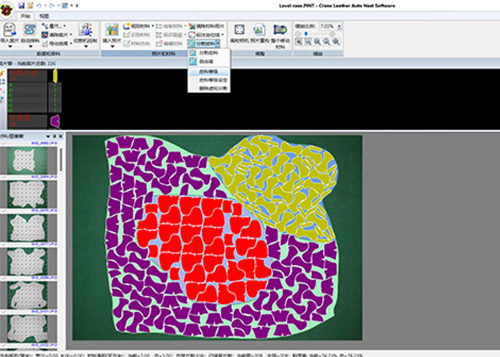
AMOR CNC nesting software can complete super nesting in approximately 2 minutes. Compared with manual nesting, it can help customers save around 5% of fabric costs through more efficient pattern arrangement.
Why Is Manual Fabric Nesting Inefficient?
Fabric is one of the major material costs in sofa manufacturing. A factory may process large quantities of fabric every day, so material utilization has a direct effect on production costs.
Manual nesting requires workers to arrange different fabric patterns within the available fabric width. Workers need to consider the shape, size, direction, and position of each piece.
This process takes time. Workers may also leave unnecessary gaps between patterns because they cannot quickly test every possible arrangement.
The problem becomes more serious when a factory handles different sofa models and customized orders.
How Does Automatic Nesting Optimize Fabric Layout?
Our automatic nesting software helps manufacturers arrange multiple fabric patterns in a more efficient way.
The operator imports the digital cutting patterns into the software. The system then calculates suitable arrangements and generates an optimized nesting layout.
AMOR CNC software can complete super nesting in approximately 2 minutes. This helps workers reduce the time spent arranging fabric pieces manually.
The software also allows operators to set the nesting direction according to the cutting process.
This function is important because not every fabric can be arranged in any direction. Some upholstery fabrics have directional patterns, textures, or other production requirements. The operator can set the required nesting direction to match the fabric and cutting process.
How Much Fabric Cost Can Automatic Nesting Save?
According to AMOR CNC’s product information, our automatic nesting solution can help customers save approximately 5% of fabric costs compared with manual nesting.
For a sofa factory that purchases a large amount of fabric every month, this saving can make a meaningful difference.
For example, if a factory spends $20,000 on fabric each month, a 5% reduction would represent $1,000 in potential monthly savings.
Actual results depend on fabric type, pattern layout, production volume, and existing nesting efficiency.
We believe automatic nesting is not just a software function. It is a practical way to control material costs and improve production planning.
3. How Does the Automatic Feeding Correction System Improve Cutting Efficiency?
Do your workers need to pull, align, and reposition fabric rolls repeatedly? Manual feeding can interrupt production and increase labor requirements.
Our automatic feeding correction system keeps roll fabric moving accurately during continuous conveying. The system reduces the need for manual intervention and supports continuous cutting, helping manufacturers improve production efficiency.

How Does Automatic Fabric Feeding Work?
Traditional sofa fabric cutting often requires workers to spread fabric manually across the cutting table.
Workers need to pull the fabric, adjust its position, and make sure it covers the required cutting area. This process requires time and physical effort.
Our automatic feeding system helps simplify this process.
The system feeds roll fabric onto the conveyor platform. The machine moves the fabric forward according to the cutting program and production requirements.
This reduces repeated manual fabric handling and helps create a more continuous production process.
Why Is Automatic Fabric Correction Important?
Fabric position affects cutting accuracy. If the fabric moves away from its required position during feeding, the cutting patterns may not match the intended layout.
Our automatic feeding correction system helps maintain accurate fabric conveying during continuous feeding.
The system reduces the need for workers to adjust the fabric manually during normal operation.
This is especially useful for factories that process long rolls of upholstery fabric and need to complete many cutting patterns in sequence.
How Does Continuous Feeding Increase Production Efficiency?
Continuous fabric cutting helps reduce interruptions between cutting operations.
With manual feeding, workers may need to stop the production process to pull fabric forward and reposition it. These repeated operations take time.
Our automatic feeding correction system supports continuous roll fabric processing. The machine can feed the fabric forward and continue the cutting process according to the programmed production workflow.
This helps manufacturers reduce manual handling and improve the use of machine working time.
However, actual production efficiency also depends on fabric width, roll length, cutting pattern arrangement, machine speed, and material characteristics.
For sofa manufacturers with large and regular cutting orders, automatic feeding can make daily production more convenient and efficient.
4. How Do Digitizing, Nesting, and Automatic Feeding Work Together?
Are you using separate methods for pattern preparation, fabric arrangement, and material feeding? These disconnected steps can make production management more complicated.
AMOR CNC combines digitizing, automatic nesting, and automatic feeding correction to create a more connected sofa fabric cutting process. Each function handles a different production task, and the three functions work together to reduce repetitive manual operations.
Step 1: Scan Paper Patterns into Digital Files
The operator uses the digitizer to scan paper kraft templates.
The system converts the patterns into 1:1 electronic data without requiring manual CAD drawing.
The factory can save these files and build a digital pattern database for future orders.
Step 2: Generate an Optimized Nesting Layout
The operator selects the required digital patterns and imports them into the nesting software.
The software arranges the patterns to improve fabric utilization. The operator can also set the nesting direction according to the fabric and cutting requirements.
Our software can complete super nesting in approximately 2 minutes.
Step 3: Feed Fabric Automatically
The operator loads the fabric roll onto the automatic feeding system.
The feeding correction system helps maintain the correct fabric conveying position and reduces the need for manual adjustment.
Step 4: Start CNC Cutting
The machine follows the generated cutting paths and processes the fabric according to the digital patterns.
The factory can complete the cutting process with less manual pattern preparation, fabric arrangement, and feeding work.
What Changes in the Production Process?
The following table shows how these three functions improve traditional sofa fabric cutting.
| Production Task | Traditional Method | AMOR CNC Solution |
|---|---|---|
| Pattern preparation | Manual paper pattern handling and drawing | Digitizer converts paper templates into 1:1 electronic data |
| Pattern management | Physical template storage | Digital pattern database |
| Fabric nesting | Manual arrangement | Super nesting in approximately 2 minutes |
| Fabric utilization | Depends on manual arrangement | Around 5% potential fabric cost saving |
| Fabric feeding | Manual pulling and positioning | Automatic feeding correction |
| Continuous cutting | Frequent manual intervention | Continuous roll fabric cutting |
These functions help manufacturers create a more organized production process. Workers can spend less time on repeated preparation tasks and focus more on production monitoring and quality control.
5. How Does an Automatic CNC Sofa Fabric Cutting Machine Reduce Labor Costs?
Are your workers spending too much time on repetitive cutting preparation? Your factory may be using valuable labor hours for tasks that can be automated.
An automatic CNC sofa fabric cutting machine reduces repetitive work in pattern preparation, fabric nesting, and fabric feeding. It helps manufacturers use their workforce more efficiently and reduce dependence on manual operations.
Reduce Manual Pattern Preparation
The digitizer allows workers to scan paper kraft templates instead of manually creating CAD drawings.
This reduces the time needed to prepare electronic cutting patterns. Workers can also reuse saved digital patterns for repeat orders.
Reduce Manual Nesting Work
The automatic nesting software completes super nesting in approximately 2 minutes.
Workers do not need to spend as much time manually arranging different fabric patterns. They can prepare more cutting jobs and focus on other production tasks.
Reduce Manual Fabric Handling
The automatic feeding correction system reduces the need for workers to pull and reposition fabric continuously.
The machine can support continuous roll fabric cutting without manual intervention during normal automatic feeding operation.
Improve Workforce Allocation
Automation does not mean that a factory no longer needs workers.
Operators still need to load materials, select cutting programs, monitor the machine, inspect cutting quality, and manage finished fabric pieces.
However, automation reduces the amount of repetitive manual work. This allows manufacturers to allocate workers to more valuable production tasks.
We believe the real value of an automatic CNC sofa fabric cutting machine is not simply replacing manual cutting. It is helping manufacturers make better use of their existing workforce.
6. How Can Automatic CNC Cutting Improve Sofa Manufacturing Efficiency?
Do you want to increase production without continuously adding more workers? A more efficient production process can help your factory handle more orders with better resource management.
AMOR CNC helps manufacturers improve production efficiency through faster pattern preparation, optimized nesting, and continuous fabric feeding. These functions reduce unnecessary preparation time and support a smoother cutting workflow.
Faster Pattern Preparation and Order Changes
The digitizer allows factories to convert existing paper templates into digital data.
Workers can save and retrieve patterns instead of repeatedly preparing new CAD drawings.
This is useful for sofa manufacturers that handle different styles and repeat orders.
Less Time Spent on Fabric Arrangement
The nesting software can complete super nesting in approximately 2 minutes.
This reduces the time workers spend arranging patterns and helps them prepare cutting jobs more quickly.
More Continuous Fabric Processing
The automatic feeding correction system supports continuous roll fabric cutting.
The system reduces interruptions caused by repeated manual fabric positioning and helps improve machine utilization.
Better Production Data Management
The digital pattern database helps manufacturers organize different sofa designs and their related cutting patterns.
Workers can access existing electronic patterns more easily. This makes repeat production and order management more convenient.
Together, these functions help manufacturers build a more efficient and organized fabric cutting process.
7. What Should You Consider When Choosing an Automatic CNC Sofa Fabric Cutting Machine?
Are you comparing different sofa fabric cutting machines? The machine price alone does not tell you whether the equipment matches your production needs.
We recommend evaluating the complete production workflow before selecting an automatic CNC sofa fabric cutting machine.
Working Area and Fabric Roll Width
The working area should match the width of your common upholstery fabric rolls.
A suitable working size helps the factory process its regular materials without unnecessary repositioning.
Digitizer and Pattern Management
If your factory already uses many paper kraft templates, a digitizer can help convert these patterns into electronic files.
You should check whether the system supports 1:1 conversion and digital pattern storage.
Nesting Software
The nesting software should support your fabric layout requirements.
You should also check whether the operator can set the nesting direction according to fabric patterns and cutting processes.
Automatic Feeding Correction System
For factories that process roll fabric, automatic feeding and correction are important functions.
You should check whether the system can maintain stable fabric conveying and support continuous cutting.
Cutting Tools and After-Sales Support
Different upholstery materials may require different cutting tools.
You should discuss your fabric types, thicknesses, roll widths, and production requirements with the supplier before confirming the machine configuration.
We also recommend checking software training, installation support, and after-sales service.
8. Why Choose AMOR CNC for Automatic Sofa Fabric Cutting?
Are you looking for more than a standard fabric cutting machine? AMOR CNC focuses on helping sofa manufacturers improve their complete fabric cutting workflow.
Our Automatic CNC Sofa Fabric Cutting Machine combines three important functions: digitizing, automatic nesting, and automatic feeding correction.
Digitizer: From Paper Templates to Digital Data
Our digitizer scans paper kraft templates and converts them into 1:1 electronic data without requiring CAD drawings.
It helps manufacturers build digital pattern databases and manage different sofa designs more easily.
Nesting Software: Save Time and Fabric Costs
Our nesting software can complete super nesting in approximately 2 minutes.
Compared with manual nesting, it can help customers save around 5% of fabric costs. The operator can also set the nesting direction according to the cutting process.
Automatic Feeding Correction: Support Continuous Cutting
Our automatic feeding correction system helps maintain accurate fabric conveying.
It reduces the need for manual intervention and supports continuous cutting of roll fabric.
A More Efficient Sofa Fabric Production Process
These three functions work together to reduce repetitive preparation work, improve fabric utilization, and support continuous production.
At AMOR CNC, we do not believe that every factory needs the same machine configuration.
We recommend selecting the machine according to your fabric types, roll width, existing paper patterns, and daily production requirements.
Our goal is to help each customer find a practical cutting solution that improves production efficiency without unnecessary equipment costs.
Conclusion
AMOR CNC helps sofa manufacturers reduce labor, save fabric costs, and improve production efficiency through digitizing, automatic nesting, and continuous fabric feeding.
Contact AMOR CNC to find the right automatic sofa fabric cutting solution for your factory.