跳到内容
Traditional duct fabrication takes too much time. Manual drawing, repeated angle adjustments, and material waste increase production costs. How can manufacturers solve these problems?
To choose the right 5 Axis CNC Duct Cutting Machine, I recommend checking material compatibility, automatic angle adjustment, intelligent duct design software, nesting efficiency, and cutting accuracy. A well-designed system can reduce manual work, improve production speed, and simplify the fabrication of complex pre-insulated ducts.

Many HVAC duct manufacturers want to increase production without hiring more skilled workers. However, traditional duct fabrication often depends on experienced operators who can calculate dimensions, prepare cutting drawings, and adjust cutting tools.
At AMOR CNC, I focus on making this process simpler.
Our new 5 Axis CNC Duct Cutting Machine combines intelligent duct fabrication software, automatic nesting, and a five-axis cutting system. The operator can select a duct shape, enter dimensions, and let the software generate the cutting drawings. The machine then completes the required cutting operations with automatic angle adjustments.
But not every CNC duct cutting machine offers the same functions.
Before investing in new equipment, I recommend understanding how these systems work and which features can actually improve your production.
What Is a 5 Axis CNC Duct Cutting Machine and How Does It Work?
Traditional duct cutting requires several manual steps. Workers must prepare drawings, calculate cutting angles, and adjust tools. These operations slow down production and increase mistakes.
A 5 Axis CNC Duct Cutting Machine is an automated cutting system for pre-insulated duct boards. It combines digital duct design, cutting path generation, and programmable cutting angle adjustment. The machine can produce straight ducts, elbows, tees, and other fittings with less manual setup.
How Does the Automatic Duct Fabrication Process Work?
I designed the AMOR CNC duct fabrication workflow around one important goal: making the machine easy to operate.
The operator does not need to create complex CAD drawings for common duct fittings. Instead, the software provides a built-in library of duct shapes.
The operator selects the required fitting and enters its dimensions. The software automatically generates the corresponding cutting drawing, including the required cutting lines and angles.
The automatic nesting system then arranges the parts on the board to reduce waste.
After the operator confirms the layout, the machine starts cutting. The five-axis cutting head automatically adjusts its cutting angle according to the programmed path.
The main production process includes six steps:
- Select the duct shape: The operator chooses a straight duct, elbow, tee, or another fitting from the software library.
- Enter the dimensions: The operator inputs the required width, height, angle, and other relevant measurements.
- Generate the drawing: The software automatically creates the cutting layout.
- Optimize nesting: The system arranges the parts to improve material utilization.
- Start automatic cutting: The machine cuts the board and adjusts the cutting angle as required.
- Assemble the duct: Workers collect and assemble the finished duct components.
Why Is This Process Better Than Manual Cutting?
The main benefit is that the operator does not need to calculate and draw every cutting line manually.
For example, when producing a 90-degree elbow, traditional processing may require several measurements and cutting angle adjustments.
With AMOR CNC software, the operator selects the appropriate elbow design and enters the required dimensions.
This reduces preparation time and helps different operators follow the same production process.
What Materials Can a 5 Axis CNC Duct Cutting Machine Process?
Different insulation boards require different cutting methods. A machine that works well with one material may not produce the same results with another.
I recommend choosing a 5 Axis CNC Duct Cutting Machine based on the actual materials used in your factory, including their thickness, density, facing layers, and required duct structures.

Phenolic Duct Boards
Phenolic duct boards are widely used in pre-insulated HVAC duct systems.
These boards normally contain a rigid insulation core with protective facing layers. The cutting process must create accurate grooves and clean edges so that the finished parts can be assembled correctly.
I recommend checking whether the cutting machine can complete straight cutting, V-grooving, and different angle cuts.
Incorrect groove angles may create gaps during duct assembly. These gaps can affect the finished duct’s quality and may require additional sealing or rework.
The AMOR CNC five-axis system is designed to handle different cutting angles automatically. This makes it suitable for producing a variety of phenolic duct fittings.
PIR and PUR Pre-Insulated Duct Boards
PIR and PUR insulation boards are also common materials in HVAC duct fabrication.
These materials can have different densities, thicknesses, and facing structures.
When selecting a machine, I recommend testing both the insulation core and the facing material.
The cutting tool must pass through the board cleanly without unnecessary tearing or damage.
For aluminum-faced boards, the cutting process must also protect the facing layer and maintain accurate cutting dimensions.
Other Insulation Materials
Some HVAC manufacturers also process glass wool boards, rock wool boards, and other insulation materials.
These materials may require different cutting tools and machine configurations.
I always recommend confirming the material requirements before selecting the equipment.
| Material | Main Cutting Requirements | Typical Application |
|---|---|---|
| Phenolic duct boards | Accurate angle cutting and V-grooving | Pre-insulated HVAC ducts |
| PIR duct boards | Clean edges and facing protection | Thermal insulation ducts |
| PUR duct boards | Stable cutting and precise dimensions | Pre-insulated duct systems |
| Glass wool boards | Suitable cutting tools and fiber control | Fiberglass duct systems |
| Rock wool boards | Strong cutting capability and suitable dust control | Insulation components |
I suggest sending material samples to the machine supplier before purchasing. Actual cutting tests provide more useful information than specifications alone.
Why Is a 5-Axis Cutting System Better Than a Traditional 3-Axis Machine?
Traditional duct cutting machines often use fixed-angle cutting tools. Different duct structures may require different tools or manual adjustments. This reduces flexibility.
A 5 Axis CNC Duct Cutting Machine uses a programmable cutting system to adjust the tool angle automatically. It reduces manual tool adjustments and supports more flexible processing of different duct shapes.

Automatic Cutting Angle Adjustment
One of the most important advantages of the AMOR CNC five-axis cutting system is its ability to change cutting angles automatically.
Traditional three-axis duct cutting machines may need several cutting tools with fixed angles.
For example, a machine may use separate tools for straight cutting, 45-degree cutting, and other groove angles.
When a job requires a different angle, the operator may need to change the tool or adjust its position.
Our five-axis cutting system simplifies this process.
The cutting head automatically changes its angle according to the cutting program. The operator does not need to manually calculate and set every cutting line angle.
This is especially useful when producing complex duct components.
Flexible Fabrication of Different Duct Fittings
HVAC systems require many duct shapes.
A factory may produce straight ducts in the morning and switch to elbows, tees, or reducers in the afternoon.
I believe that a good duct cutting machine must handle these changes without complicated setup.
The AMOR CNC five-axis system can support the fabrication of various duct components, including:
- Straight rectangular ducts
- 90-degree elbows
- Different-angle elbows
- Tee fittings
- Reducers
- Round-to-square transitions
- Other customized duct fittings supported by the software and tool configuration
For example, when producing an elbow, the machine can follow the generated cutting path and automatically adjust the tool angle.
This helps workers prepare parts for accurate assembly.
3-Axis vs 5-Axis CNC Duct Cutting Machine
| Comparison | Traditional 3-Axis Machine | AMOR CNC 5-Axis Machine |
|---|---|---|
| Angle adjustment | Often uses fixed-angle tools | Automatic programmable adjustment |
| Manual tool changes | May be required | Reduced for supported cutting operations |
| Complex duct fittings | More setup may be needed | More flexible fabrication |
| Drawing preparation | Depends on software | Built-in duct fitting library |
| Operator requirements | More manual setup may be needed | Simplified workflow |
| Production flexibility | Depends on tool configuration | Suitable for varied duct designs |
I do not believe that every factory must replace its three-axis machine.
If a factory produces only simple duct shapes, a three-axis machine may still meet its requirements.
However, if the factory frequently produces different elbows, tees, reducers, and customized fittings, I recommend considering a five-axis system.
How Important Is Intelligent Software for CNC Duct Fabrication?
Many manufacturers focus on machine speed and cutting tools. However, complicated software can waste more time than the cutting process itself.
I recommend choosing a CNC Duct Cutting Machine with intelligent duct design software, automatic drawing generation, and material nesting. These functions can reduce drawing time, simplify operation, and improve production efficiency.

Built-In Duct Fitting Library
One of the biggest advantages of AMOR CNC is its intelligent duct fabrication software.
The software includes a library of common duct fittings.
The operator does not need to draw every fitting manually in CAD software.
For example, if the operator wants to make a rectangular elbow, the process is simple.
The operator selects the elbow shape from the library and enters the required dimensions.
The software automatically generates the processing drawing.
More importantly, the operator does not need to calculate the cutting angles or manually configure each cutting line.
The system prepares the required cutting information according to the selected fitting and dimensions.
This function helps factories reduce their dependence on professional CAD operators.
Automatic Nesting to Reduce Material Waste
Material cost is an important part of pre-insulated duct production.
Poor nesting can leave large unused areas on the insulation board.
The AMOR CNC software includes an automatic nesting function that arranges cutting parts to improve material utilization.
The system calculates a suitable layout based on the available board dimensions and cutting parts.
The operator can review the layout before starting production.
For example, consider a factory that spends $20,000 each month on insulation boards.
If better nesting reduces material consumption by 5%, the potential savings would be:
| Item | Illustrative Value |
|---|---|
| Monthly board cost | $20,000 |
| Assumed material saving | 5% |
| Monthly savings | $1,000 |
| Annual savings | $12,000 |
These figures are only a calculation example. Actual savings depend on part geometry, board size, nesting settings, and existing material utilization.
Simple Operation Without Complex CAD Skills
I believe industrial equipment should be easy to operate.
A machine may have advanced functions, but those functions offer limited value if workers cannot use them efficiently.
The AMOR CNC software simplifies common duct fabrication tasks.
Operators can select duct shapes, enter dimensions, generate cutting drawings, and start production through a structured workflow.
This reduces the need for manual drawing and repeated cutting angle setup.
No Annual Software Subscription Fee
Software costs should also be considered when buying a machine.
Some industrial software requires annual subscription or renewal payments.
AMOR CNC’s duct fabrication software is provided for lifetime use without an annual software subscription fee, subject to the agreed license terms.
I consider this an important advantage because buyers can plan their long-term operating costs more clearly.
I also recommend checking software updates, technical support, and licensing conditions before purchasing any duct cutting machine.
What Machine Configuration Should Buyers Check Before Purchasing?
A powerful cutting head cannot guarantee good results if the machine structure is unstable. Poor material fixing and inaccurate movement can affect cutting quality.
I recommend checking the machine frame, cutting tools, servo motors, guide rails, vacuum table, and working area before choosing a 5 Axis CNC Duct Cutting Machine.

Cutting Tools and Angle Control
Different duct boards and fitting designs require different cutting operations.
The machine should support straight cutting, angle cutting, and grooving according to the required production process.
For example, when making a rectangular duct, the machine must create suitable grooves so that the board can fold into the required shape.
If the cutting angle is incorrect, the duct may not close properly.
I recommend checking whether the machine can maintain consistent cutting depth and angle during continuous production.
The AMOR CNC five-axis cutting system automatically adjusts the cutting angle according to the generated program.
This reduces manual setup and supports flexible processing.
Machine Structure and Movement Accuracy
The machine frame must provide sufficient rigidity during cutting.
I recommend checking the guide rails, transmission system, servo motors, and tool mounting structure.
A stable structure helps the cutting head follow the programmed path accurately.
For HVAC duct fabrication, cutting accuracy is important because separate panels must fit together during assembly.
Even small dimensional errors can affect the final duct structure.
The machine should also maintain consistent accuracy when cutting both straight lines and complex shapes.
Vacuum Table and Material Fixing
During cutting, the insulation board must stay in position.
If the board moves, the machine may cut in the wrong location.
A vacuum adsorption table helps hold the board during processing.
However, different insulation materials have different surface structures and air permeability.
Some porous boards may need additional covering or fixing methods to achieve stable adsorption.
I recommend testing the actual material on the machine instead of relying only on vacuum pump specifications.
Working Size and Factory Requirements
The machine working area should match the insulation board dimensions used in the factory.
Buyers should also check the machine’s installation space, electrical requirements, material loading, and finished-part collection area.
I usually ask customers to provide their board dimensions and factory layout before recommending a machine configuration.
This helps avoid purchasing equipment that is too small, too large, or difficult to install.
How Can a 5 Axis CNC Duct Cutting Machine Reduce Labor Costs and Improve Production?
Labor costs continue to affect many HVAC duct manufacturers. Manual cutting also creates problems when factories need to produce different duct shapes quickly.
A 5 Axis CNC Duct Cutting Machine can reduce labor requirements by automating duct drawing generation, nesting, and angle cutting. It can also improve production capacity by reducing preparation time and simplifying repeated cutting operations.

Reduce Manual Drawing and Measurement
Traditional duct fabrication often involves several manual processes.
Workers must calculate dimensions, prepare drawings, mark cutting positions, and adjust tools.
These tasks require experience and take time.
With AMOR CNC software, the operator selects a duct shape and enters the required dimensions.
The system automatically generates the cutting drawing.
This reduces drawing preparation and helps operators avoid manual calculation mistakes.
It also allows factories to train workers around a more standardized production process.
Reduce Cutting Setup Time
A traditional machine may require manual tool adjustments when the cutting angle changes.
These adjustments interrupt production.
The AMOR CNC five-axis system automatically changes the cutting angle according to the program.
For factories producing many different duct fittings, this can reduce machine setup time.
The operator can move between different duct designs without repeatedly configuring fixed-angle cutting tools for every supported operation.
Improve Production Efficiency
I recommend evaluating the complete production process instead of comparing only maximum cutting speed.
For example, imagine two machines processing the same duct order.
Machine A has a high cutting speed but requires frequent manual drawing and tool adjustments.
Machine B has a similar cutting speed but automatically generates drawings, optimizes nesting, and changes cutting angles.
Machine B may complete the full order faster because it spends less time on preparation.
The actual difference depends on the duct designs, material, cutting length, and production workflow.
How Should Buyers Calculate Return on Investment?
I suggest using a simple calculation to estimate potential cost savings.
Annual Net Savings = Labor Savings + Material Savings + Reduced Rework Costs − Additional Operating Costs
For example, consider a factory with the following estimated improvements:
| Savings Category | Illustrative Annual Savings |
|---|---|
| Reduced manual labor | $15,000 |
| Improved material utilization | $8,000 |
| Reduced rework | $2,000 |
| Total gross savings | $25,000 |
If the machine creates $3,000 in additional annual operating costs, the estimated annual net savings would be $22,000.
If the initial equipment investment were $30,000, the simple payback period would be approximately 1.36 years.
This example is not a guaranteed production result. Actual payback depends on local labor costs, machine utilization, material prices, and operating conditions.
I recommend asking suppliers to calculate production efficiency using your real duct drawings and materials.
What Should Buyers Test Before Ordering a 5 Axis CNC Duct Cutting Machine?
Machine specifications cannot show every problem that may occur during production. A machine may look impressive in a video but perform differently with your actual material.
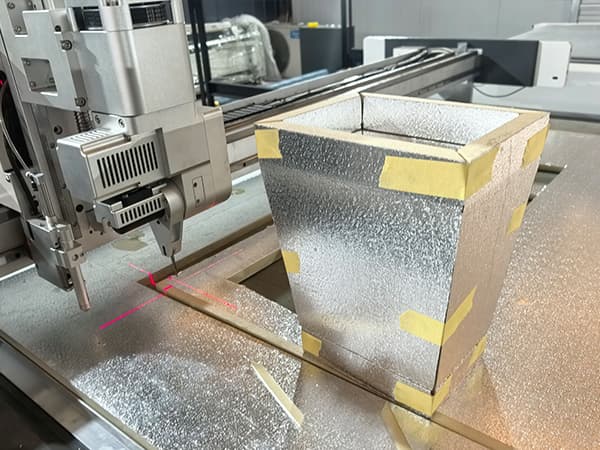
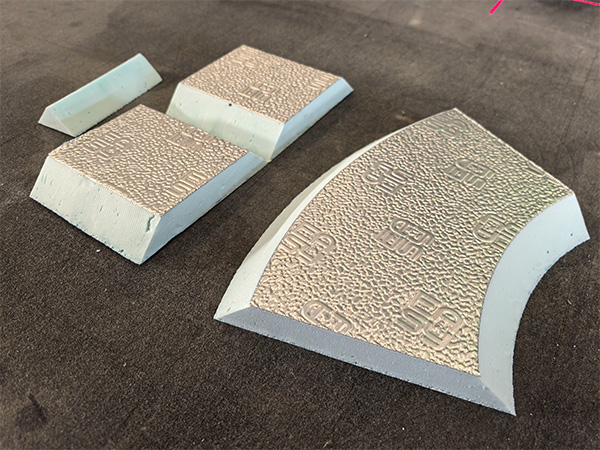
I recommend testing real duct boards, complex fitting designs, software functions, and assembly quality before purchasing a 5 Axis CNC Duct Cutting Machine.
Test Different Duct Fittings
A professional duct cutting machine should process more than simple rectangular panels.
I recommend asking the supplier to demonstrate several different products.
These may include straight ducts, 90-degree elbows, tees, reducers, and customized fittings.
The supplier should show the complete process from software input to final cutting.
I also recommend checking how the finished parts fit together.
A clean cutting edge is important, but accurate assembly is equally important.
Test the Software Yourself
The software is one of the most important parts of an automatic duct fabrication system.
I suggest asking the supplier to demonstrate how an operator creates a new duct fitting.
The demonstration should include selecting a duct shape, entering dimensions, generating cutting drawings, and using automatic nesting.
Buyers should pay attention to how many manual steps are required.
If the operator must spend a long time preparing drawings or setting cutting angles, the machine may not provide the expected level of automation.
Check Cutting Accuracy and Edge Quality
The cutting test should also focus on the quality of the finished components.
I recommend checking the following points:
- Whether the cutting dimensions match the design.
- Whether the machine produces smooth and consistent edges.
- Whether groove angles meet the assembly requirements.
- Whether the facing material remains in good condition.
- Whether the finished duct components fit together correctly.
- Whether the machine maintains stable performance during repeated cutting.
Confirm Technical Support and Training
Good after-sales support is important for overseas buyers.
Before purchasing, I recommend asking about operator training, software instructions, spare parts availability, remote technical support, and warranty coverage.
The buyer should also confirm the required electrical supply, installation space, and machine configuration.
At AMOR CNC, I prefer to discuss these requirements before shipment so the customer can prepare the factory properly.
Why Should HVAC Manufacturers Consider the AMOR CNC 5 Axis Duct Cutting Machine?
Many CNC machines can cut insulation boards. However, a complete duct fabrication system must also simplify design, optimize material usage, and process different duct fittings efficiently.
At AMOR CNC, I focus on combining intelligent software, automatic nesting, and five-axis cutting technology to help HVAC manufacturers improve production flexibility and reduce manual work.

Intelligent Duct Design Without Manual Drawing
Our duct fabrication software includes a library of commonly used duct fittings.
The operator selects the required duct shape and enters the dimensions.
The software then generates the cutting drawing automatically.
The operator does not need to manually design every cutting line or calculate the required cutting angles.
I consider this one of the most useful functions for factories that produce different duct designs every day.
It can reduce drawing preparation time and make production easier for new operators.
Automatic Nesting for Better Material Utilization
Our nesting software arranges the cutting parts according to the available board dimensions.
The operator can review the generated layout before cutting.
This helps reduce unnecessary gaps between parts and improve material utilization.
For factories using large quantities of PIR, PUR, or phenolic boards, even modest material savings can have a meaningful effect on production costs.
Five-Axis Cutting for Flexible Duct Production
The five-axis cutting system automatically adjusts the cutting angle according to the processing requirements.
This allows the machine to handle different duct shapes without frequent manual angle adjustments.
Our system is especially useful for manufacturers producing straight ducts, elbows, tees, reducers, and other customized duct components.
I believe this flexibility is important because HVAC projects rarely require only one duct design.
A Complete Solution for HVAC Duct Manufacturers
When choosing equipment, I recommend looking beyond the initial machine price.
Buyers should consider software functions, tool configuration, cutting flexibility, operating costs, and future production requirements.
At AMOR CNC, we can evaluate customer materials, duct drawings, working dimensions, and production needs before recommending a suitable machine configuration.
Our goal is to help manufacturers choose equipment that fits their actual production process instead of paying for functions they do not need.
Conclusion
I recommend choosing a 5 Axis CNC Duct Cutting Machine that combines intelligent software, automatic nesting, reliable cutting performance, and flexible angle control to reduce labor and improve production.
For more information about AMOR CNC’s five-axis duct fabrication solutions, contact us with your board specifications and sample drawings.