
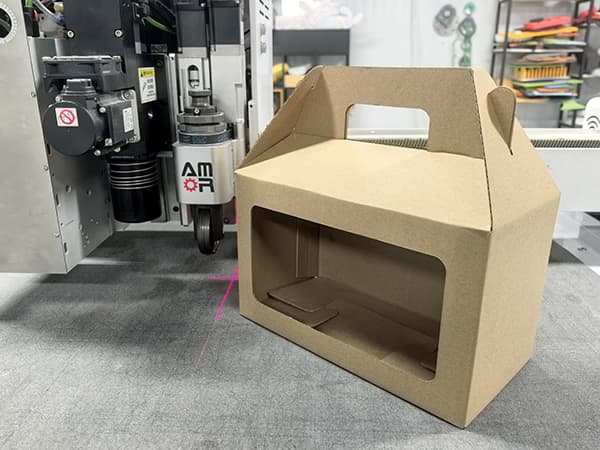
Wrong machine choice wastes board, time, and profit.
A CNC cardboard cutting machine is not just for cutting. I use it to cut, crease, slot, V-cut, and mark on one platform, so packaging factories can make samples, short runs, and custom boxes with better speed and control.
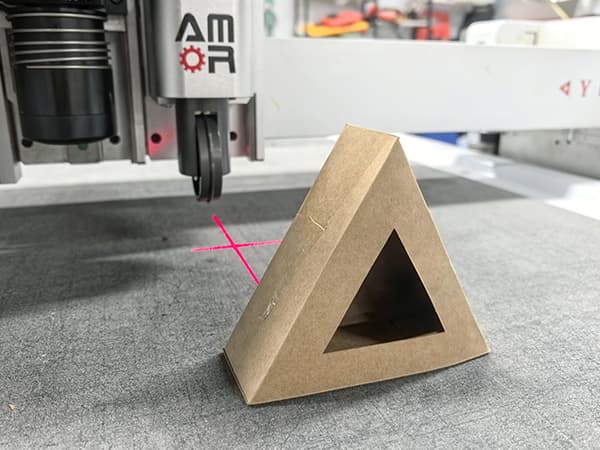
Before I compare machines, I want to stop one common mistake. Many buyers still ask only one question: “Can it cut cardboard?” That question is too small. A real packaging job needs more than one action. A box is not a flat sheet. It must fold, bend, close, align, and sometimes display well on a shelf. So when I evaluate an AMOR CNC cardboard cutting machine, I look at the full process, not only the cut line. If you want a machine that really helps your packaging production, keep reading from start to finish.
Why is a CNC cardboard cutting machine more than a cutter?
Many buyers focus on the blade and forget the box.
I always say this first: a cardboard box becomes a box only after several processes work together. A good CNC cardboard cutting machine must do more than cut. It must also crease, slot, mark, and in some jobs V-cut.
What I mean by “real processing ability”
When I talk with packaging customers, I often find the same problem. They compare machines by speed only. Speed matters, but speed alone does not make a usable box. A packaging sheet usually needs an outer cut, fold lines, waste removal areas, slots, hand holes, and position marks. Some display boxes and special gift-style structures also need bevel processing so the board folds more cleanly or joins at a better angle. That is why I do not like to call the machine “just a cutter.” That description is too weak for real factory work.
Why one platform saves more time
If I use one machine to finish cutting, creasing, slotting, V-cutting, and marking on the same table, I reduce handling time. I also reduce alignment errors between different steps. In manual work, the operator may move the sheet from one station to another. Each move adds risk. The fold line may drift. The slot may not match the outline. The printed note may sit in the wrong place. A multi-function AMOR CNC cardboard cutting machine helps avoid that. I can load the board once, process it in order, and get a cleaner result.
Why this matters for short runs and samples
This point is very important for packaging factories that handle custom orders. A die may still make sense for very large and stable orders. But for samples, prototypes, design verification, seasonal packaging, and small batches, a digital cardboard machine is much more flexible. I can change the file, change the size, and run again without waiting for a new die. That is why many factories now use CNC machines for proofing and short-run packaging production. The real value is not only cutting. The real value is process freedom.
What operations should the machine really support?
A box line without creasing is only half done.
I judge a machine by the full list of operations it can finish well: cutting for shape, creasing for folding, slotting for structure, V-cutting for special joints, and marking for assembly and workflow control.
| Operation | What it does | Why it matters in box making | Typical tool |
|---|---|---|---|
| Cutting | Cuts outer shape and inner holes | Defines final box size and part contour | Oscillating knife / drag knife |
| Creasing | Presses fold lines without cutting through | Helps clean folding and stable box forming | Creasing wheel |
| Slotting | Creates structural gaps and insert paths | Makes flaps, locks, and assembly sections work | Knife / dedicated slot path |
| V-Cutting | Removes material in an angle | Helps angled folds and display structures | V-cut or bevel tool |
| Marking | Draws assembly lines, codes, notes | Helps sorting, assembly, and job tracking | Pen / marking tool |
Cutting is only the first step
Outer cutting is the most visible process, so buyers notice it first. But in packaging work, even the cutting itself is not one simple action. Corrugated cardboard has flutes, layers, and surface liners. If the tool is wrong or the pressure is not stable, the edge can tear, crush, or lean. I usually look at edge quality, corner accuracy, and consistency on both straight lines and small curves. Good cutting gives the shape. It also affects how premium the box looks.
Creasing decides whether the box folds well
Creasing is often underestimated. I see many buyers ask for cutting samples and ignore fold quality. Then the box folds badly later. A good crease line must be clear enough to guide the fold, but not so deep that it breaks the face paper. If the crease is too light, the board resists folding. If it is too deep, the surface cracks. In both cases, the final package looks cheap. So I always treat creasing as a core function, not an extra feature.
Slotting, V-cutting, and marking make production practical
Slotting matters because many packaging structures depend on accurate insertion and locking. If the slot is too narrow, assembly slows down. If it is too wide, the structure becomes loose. V-cutting matters for special display packaging, thick board folding, and some structural design jobs where clean angle control helps the final form. Marking matters because modern packaging work is not only about geometry. It is also about workflow. Operators need position notes, part IDs, and fold guidance. A machine that can mark on the board saves time later on the floor.
How does it compare with manual cutting and die cutting?
Old methods look cheap until errors start to grow.
I do not reject manual cutting or die cutting in every case. I compare them by order type, batch size, design change frequency, and lead time. Then I decide what is practical.
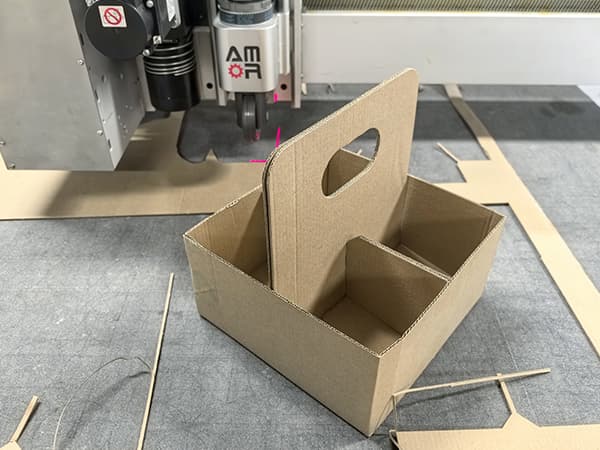
Manual cutting is flexible but hard to scale
Manual work can handle simple jobs, urgent fixes, and very low output. That is true. But manual work depends too much on operator skill. Line quality changes from person to person. Fold lines are harder to repeat. Setup looks simple, but actual output becomes unstable when order volume rises. I often see manual proofing become a bottleneck in custom packaging shops. The hidden cost is not only labor. The hidden cost is variation, rework, and slower delivery.
Die cutting is strong for big stable orders
I still think die cutting is very effective for large and repeated orders. Once the die is correct, output can be very high. But the die has a cost, and every design change brings more cost and more time. That is why die cutting is less friendly for sample development, customer-specific dimensions, and frequent SKU changes. If a packaging factory serves many custom clients, digital processing often fits better at the front end and short-run stage.
CNC gives balance between flexibility and capability
This is where the AMOR CNC cardboard cutting machine becomes useful. I can load a file, adjust the design, and run a new sample without waiting for tooling. I can also combine multiple functions on one table. In many custom packaging businesses, that balance matters more than pure top-speed production. The machine helps R&D teams test faster. It helps sales teams confirm structure faster. It helps production teams respond to small and mixed orders. In real factories, that flexibility often protects profit more than people expect.
Which tools and machine features matter most?
A strong machine without the right tools still works badly.
When I choose a cardboard cutting machine, I never ask only about bed size or motor brand. I ask which tools are included, how stable the table is, and how well the machine holds the board flat during processing.
The tool combination decides the job range
For corrugated board and packaging box work, I usually care about several tool types. An oscillating knife or suitable cutting tool handles the contour. A creasing wheel handles fold lines. A marking tool adds text, fold guides, or assembly marks. A bevel or V-cut tool helps with angle work on special structures. This combination gives the machine its true value. If the machine only has a cutting tool, then its process range stays narrow. Buyers should not overlook this point.
The table and vacuum matter more than many buyers expect
Cardboard seems light, so some buyers think table quality does not matter much. I disagree. If the sheet shifts during processing, even a sharp tool cannot save the final result. A flat working table and stable vacuum help keep the board in place. This is important for long cuts, repeated parts, and crease accuracy. In my experience, poor holding force leads to small movement. Small movement leads to wrong fold positions. Then the box does not form correctly.
Software and path control matter in daily production
Software is not decoration. It controls actual production efficiency. I look for easy file import, simple layer control, and clear operation assignment for different tools. The operator should be able to define cut lines, crease lines, slot paths, and marking layers without confusion. Good software reduces training time and reduces setup mistakes. In packaging work, many delays come from bad workflow, not from bad motors. A good machine must be easy to program and easy to repeat.
What products and materials can it really handle?
If the board changes, the process must also change.
A serious buyer should ask not only “Can it cut cardboard?” but also “Which cardboard, which box type, and which production target?” That question gives a much better answer.
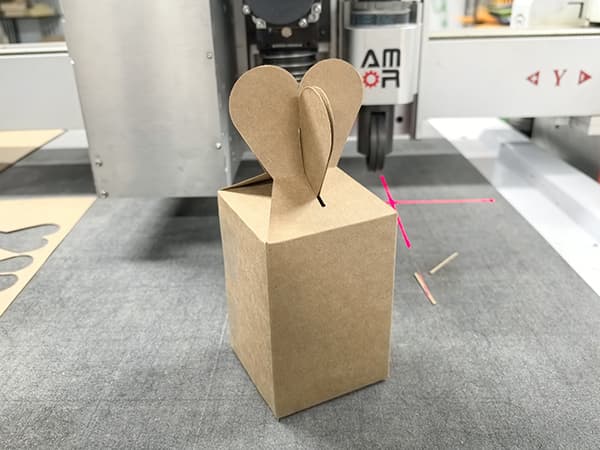
Corrugated board is not one simple material
Corrugated cardboard comes in different flute types, thickness levels, and surface qualities. Some jobs use common shipping box board. Some use finer board for retail packaging. Some use laminated or printed sheets that need cleaner handling. I always match the tool path and pressure to the actual board. A machine that works well on one type may need adjustment on another. So buyers should always test with their real material, not only with a nice-looking demo sample.
Common packaging jobs the machine can handle
In practical use, I see these machines work well for shipping cartons, custom mailer boxes, folding cartons, sample boxes, inserts, protective packaging, and display units. For simple RSC-style corrugated boxes, the job may focus on cutting and creasing. For retail display and promotional packaging, the job may need more slotting, marking, and V-cutting. That is why I say the machine’s value comes from process breadth. The more packaging styles you produce, the more important that breadth becomes.
A simple capability map
Below is the way I often explain machine value to buyers:
Simple carton      ██████████  Cut + Crease
Mailer box         ███████████ Cut + Crease + Slot
Display stand      ████████████ Cut + Crease + Slot + V-Cut
Sample making      ████████████ Fast file change + Multi-process
Custom short run   ████████████ Flexible setup + No die
This is not a speed chart. It is a value chart. It shows where a CNC cardboard machine becomes more useful as structure complexity and order variation increase.
How should I choose the right CNC cardboard cutting machine?
A wrong machine saves money only on the quotation sheet.
I always tell buyers to choose based on process, order type, and future product mix. The best machine is not the cheapest one. It is the one that matches your real packaging work.

Start with your real jobs, not the catalog
I first ask three practical questions. What materials do I process most? What box structures do I make most? What is my batch pattern: samples, short runs, or mass production? These answers shape the machine choice. A factory that mainly develops packaging samples needs fast file change and full function flexibility. A factory with stable high-volume box sizes may still use digital cutting for proofing, but keep die cutting for final mass output.
Check the process list before checking the price
This is where many decisions go wrong. Buyers compare quotations line by line, but they do not compare process ability line by line. I suggest checking these items carefully: supported operations, included tools, working size, vacuum holding strength, software ease, and sample result on your own board. If one supplier offers a lower price but removes marking, V-cutting, or strong creasing support, then the comparison is not fair. The cheaper machine may create more manual work later.
Ask for proof from your own material
I always prefer real sample testing. A supplier should show how the AMOR CNC cardboard cutting machine processes your actual corrugated board, not only a standard demo sheet. I want to see cut edges, fold lines, slot fit, angle work, and repeated accuracy on the final sample. This gives a much more honest answer than a nice parameter list. In packaging work, the real sample tells the truth quickly.
A CNC cardboard cutting machine should solve the whole box process, not just the cut line.