跳到内容
跳到内容 
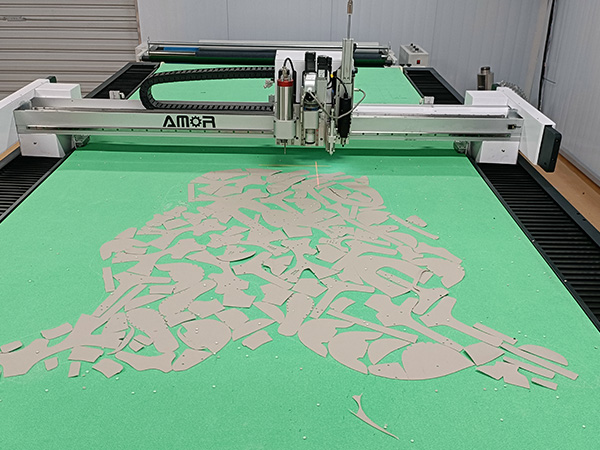
Expensive leather disappears fast under manual cutting.
A CNC leather cutting machine can often improve leather utilization by 10%–15% when nesting, defect marking, and grade-based zoning are used well. It can also reduce labor cost, improve cutting consistency, and help factories recover investment faster.
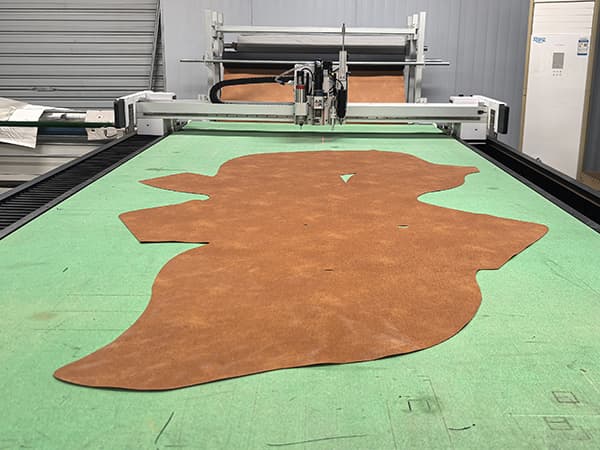
I always tell buyers the same thing: in leather cutting, the machine price is not the biggest cost. The leather is. That is why I do not begin with cutting speed when I discuss return on investment. I begin with material utilization. Leather is expensive. Leather is irregular. Every hide has a different shape, different scars, different stretch, and different high-value zones. If I waste 10% more material than I should, that loss repeats every day. This is why nesting, defect marking, and grade-based zoning matter so much. They do not just make the machine look smart. They directly affect profit.
If you are still comparing machines only by price or only by cutting speed, I suggest you slow down here. If you want to understand how a CNC leather cutting machine really saves material, lowers labor cost, and shortens payback time, keep reading.
Why Is Material Utilization the Real Profit Point in Leather Cutting?
Bad utilization silently eats margin.
Material utilization is often the real profit point because leather cost is high and hide quality is uneven. A 10%–15% gain in usable yield can create much bigger long-term value than many buyers expect from labor savings alone.
When I speak with leather goods factories, many managers first ask how many pieces the machine can cut in one hour. That is a fair question, but it is not the first question I would ask. In leather production, the most expensive part is usually the material itself. A factory can accept a machine that is slightly slower, but it cannot keep accepting waste on expensive hides month after month.
Why leather saving matters more than many buyers think
A small utilization gain sounds modest on paper. In real production, it is not modest at all. If a factory spends $20,000 on leather every month, a 10% utilization improvement means about $2,000 saved each month. A 15% improvement means about $3,000 saved each month. Over one year, that becomes $24,000–$36,000. That is often enough to change the ROI logic completely.
Why manual cutting loses material more easily
Manual cutting depends too much on the experience of one operator. A skilled worker can do a decent layout. But even a very skilled worker cannot test large numbers of nesting combinations as quickly as software can. Manual operators also tend to leave more safety space between parts. They often avoid complex hide edges. They also make more conservative decisions when the hide contains scars or wrinkles. All of this reduces yield.
A simple example of how yield affects cost
| Monthly Leather Cost | Utilization Gain | Monthly Saving | Yearly Saving |
|---|---|---|---|
| $20,000 | 5% | $1,000 | $12,000 |
| $20,000 | 10% | $2,000 | $24,000 |
| $20,000 | 15% | $3,000 | $36,000 |
This is why I say material utilization is not a secondary issue in leather cutting. It is often the first issue.
How Does Automatic Nesting Save More Leather Than Manual Cutting?
Poor nesting turns good hides into waste.
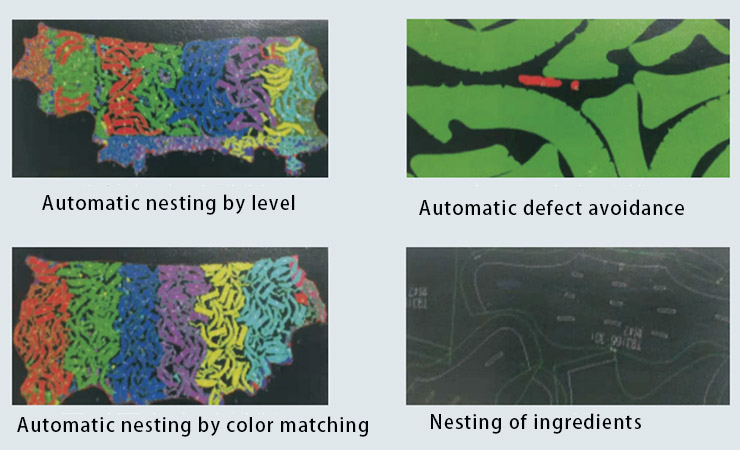
Automatic nesting saves more leather because software places patterns tighter, faster, and more consistently than manual work. It can also consider hide shape, grain direction, defect zones, and part priority at the same time.
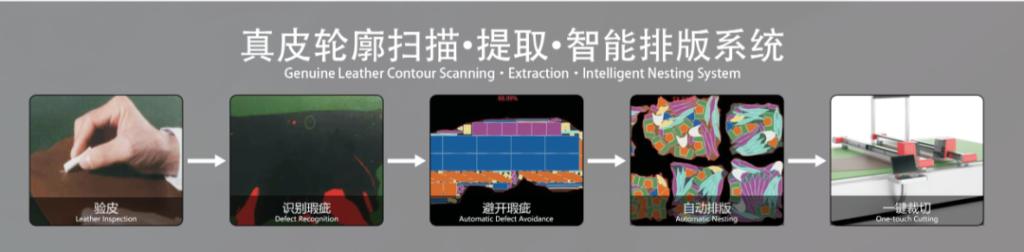
Many buyers know the word “nesting,” but they often think nesting simply means placing patterns close together. In leather cutting, that understanding is too simple. Good nesting is not just about density. Good nesting is about placing the right part in the right place on an irregular hide while respecting direction, quality level, and defect zones.
Why software nesting is stronger than manual judgment
Manual nesting depends on what the operator can see and decide in a short time. Software nesting can process more layout possibilities much faster. It can fit large parts into high-value areas. It can place smaller parts into narrow leftover spaces. It can also adjust spacing based on part shape and cutting requirements. This helps recover more usable area from each hide.
Why speed in nesting also matters
A factory does not only need a good layout. It needs a fast process. If hide inspection is slow, nesting is slow, and cutting has to wait, then the production line loses efficiency. Good nesting software reduces that waiting time. It helps operators move from hide checking to layout and then directly to cutting. This is especially useful for factories handling many small orders and many styles.
Why repeatability matters in real production
A manual operator might produce one very good layout today. But factories do not run on one good layout. They run on daily consistency. Software gives that consistency. It reduces dependence on one person’s experience. It also makes results easier to check and improve.
Manual nesting efficiency      ██████
Automatic nesting efficiency   ██████████Manual repeatability           █████
Software repeatability         ██████████
This is why I see nesting software as a profit tool, not just a design tool.
Why Do Defect Marking and Grade-Based Zoning Matter So Much?
Not all leather areas deserve the same parts.
Defect marking and grade-based zoning help avoid scars, holes, wrinkles, and weak zones. They also help place premium parts in premium leather areas, which improves both product quality and overall hide value.
Leather is not like cardboard, foam, or standard sheet material. Every hide is different. One zone may be smooth and strong. Another may contain scars, insect bites, loose grain, holes, or wrinkles. If I ignore this and only try to cut more pieces, I may get more parts on paper, but I may also get more rejected products.
Why defect marking protects finished product quality
Visible leather parts cannot accept obvious defects. A scar on a bag panel or a shoe upper can turn a finished product into a rejected product. That is why defect marking matters. It lets the operator identify bad areas before nesting starts. Then the software can avoid those zones automatically during layout. This reduces the risk of operator oversight.
Why grade-based zoning improves value
Not every part needs the same leather quality. A visible outer panel needs better leather than an internal support piece. Grade-based zoning allows me to divide the hide into different quality areas. Then I can assign high-priority parts to better areas and low-priority parts to lower-grade areas. This improves both quality control and material use.
Why these two functions work better together
Defect marking alone avoids bad zones. Grade-based zoning does more. It helps match part importance to leather value. That means I do not waste premium leather on hidden parts, and I do not risk visible parts on weak zones. This is a much smarter way to use natural material.
How Much Labor and Time Can a CNC Leather Cutting Machine Save?
Manual cutting is slow, costly, and hard to scale.
A CNC leather cutting machine can greatly reduce dependence on skilled manual cutters. In many practical cases, factories see 3–6 times higher cutting efficiency and clear labor savings because nesting, marking, and cutting become more digital and more repeatable.

I do not think labor saving should be the only reason to buy a CNC leather cutting machine. But I do think it is one of the strongest reasons. Manual leather cutting depends on experienced workers. Those workers are harder to recruit than before. They are also expensive to train. Their performance may vary. Their nesting decisions may vary even more.
Why labor risk is now a management issue
Many factories do not only suffer from high labor cost. They suffer from unstable labor. When an experienced cutter leaves, the factory loses speed and yield at the same time. A CNC system reduces that dependence. It turns more of the process into a standard method instead of a personal skill.
Why labor saving is bigger than just headcount
A CNC leather cutting machine does not only reduce cutting labor. It also reduces manual layout work, manual pattern positioning, and repeated correction work. It can shorten training time and reduce the number of critical steps that depend on personal judgment. This often improves management efficiency as well as direct labor cost.
Why time saving helps buyers respond to competition
The market is more competitive now. Customers ask for shorter lead times and more style changes. A digital cutting system helps factories respond faster. It makes sampling faster. It makes batch switching faster. It also makes production planning easier.
| Process | Manual Cutting | CNC Leather Cutting |
|---|---|---|
| Layout speed | Depends on operator | Software-assisted |
| Consistency | Varies by worker | More stable |
| Defect avoidance | Manual judgment | Marked and controlled |
| Style switching | Slower | Faster |
| Labor dependence | High | Lower |
How Fast Can Buyers Recover the Cost of the Machine?
Payback comes from daily savings, not miracles.
A CNC leather cutting machine usually recovers cost through four repeated gains: better material utilization, lower labor cost, higher throughput, and fewer quality mistakes. Buyers using expensive leather and many styles often recover cost much faster.
I do not like unrealistic ROI claims. I prefer simple and honest math. A leather cutting machine does not pay for itself because of one magic point. It pays for itself because many small savings happen every day. Material saving is one. Labor saving is one. Faster production is one. Less rework is one. When all of them improve together, the machine cost starts to look much smaller.
The four main ROI drivers
1. Material saving
This is often the largest driver. If utilization improves by 10%–15%, the leather saving can become very significant over one year.
2. Labor saving
A digital workflow reduces dependence on skilled manual cutters and lowers the cost of layout and cutting work.
3. Throughput gain
Higher processing speed means more orders can be handled in the same working time. This improves delivery capacity and supports growth.
4. Lower rework and rejection
Better nesting, better defect control, and more stable cutting reduce rejected parts and downstream problems in sewing or assembly.
A simple ROI view
ROI = Material saving
    + Labor saving
    + Higher output value
    + Less rework
A buyer processing genuine leather, many styles, and irregular hides will usually feel the return much faster than a buyer running only simple low-value materials.
What Should Buyers Check Before Trusting a Supplier’s Leather-Saving Claim?
Good marketing still needs practical proof.
Buyers should ask suppliers to prove savings using real hides, real patterns, and real production rules. The best proof is a nesting comparison, a defect-marking demo, a zoning example, and repeated cutting tests based on actual order conditions.
I always suggest that buyers do not make a decision based only on brochures or videos. Leather cutting is too practical for that. Every factory uses different hides, different products, and different quality rules. So the supplier should prove performance using your real job conditions.
What I would ask the supplier to show
I would ask for:
- a comparison between manual nesting and software nesting
- a hide inspection and defect-marking process
- a grade-based zoning example for different part levels
- a cutting test on visible and hidden parts
- a repeated test using several hides, not just one perfect hide
What machine functions matter in real leather saving
A leather cutting machine saves material only when the full system works together. Nesting software matters. Defect marking matters. Grade zoning matters. Vacuum holding matters. Automatic feeding matters. Tool stability matters. If one of these links is weak, the final saving will also be weak.
What result I want to see before I buy
I do not only want a clean cut edge. I want to see better leather usage, lower labor dependence, faster style switching, and more stable output. That is what helps a factory stay competitive.
Save leather first. Profit usually follows.