
Cheap quotes cause regret: poor cuts, downtime, wasted material, and angry operators.
I compare digital cutters by five measurable areas: structure, machining accuracy, core components, installation craft, and service. This method helps me judge AMOR CNC as a true alternative.
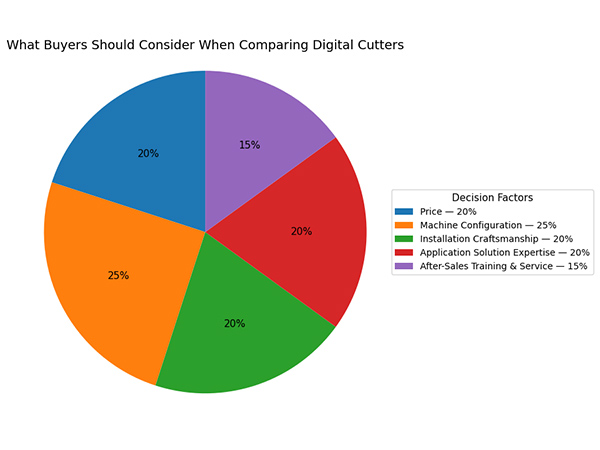
I write this for buyers who want facts, not brand worship. I also write this for any industry that uses a digital cutter: gaskets, acoustic panels, foam packaging, soft furniture, textiles, composites, and more. I focus on what stays true across all of them. I use the same checklist every time. I also show where AMOR CNC fits, and why many repeat buyers choose it.
Is the machine bed and frame the first thing I should compare?
A weak frame looks fine online, then it shakes under load and ruins accuracy.
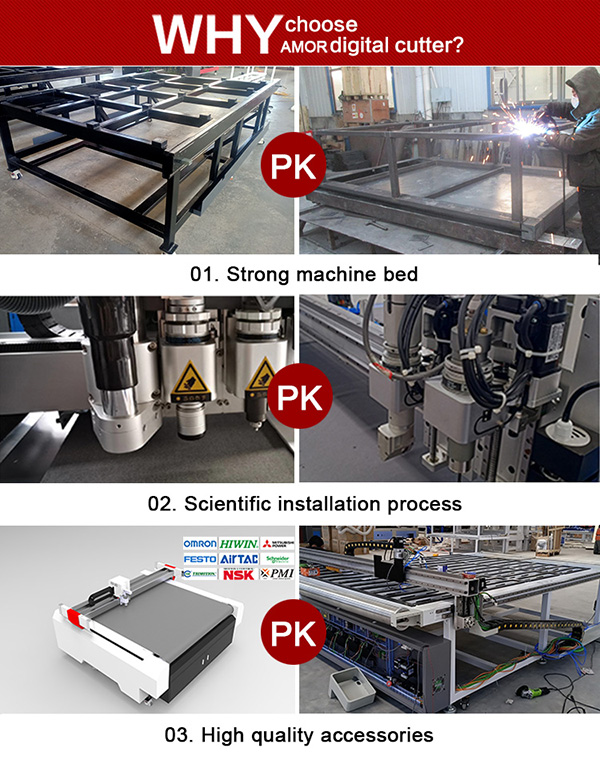
I compare the bed and frame first because rigidity controls vibration, repeatability, and tool life. A heavy welded bed with precision machining keeps output stable over long runs.
Why structure decides long-term quality
A rigid bed protects accuracy in every industry
I cut very different materials in real life. I cut soft foam. I cut dense rubber gaskets. I cut felt boards and acoustic panels. I also cut corrugated board and textiles. These materials behave differently, but the machine physics stays the same. A weak bed amplifies vibration. Vibration makes rough edges, imperfect circles, and unstable corners. Vibration also causes inconsistent cut depth when the tool meets denser zones. I prefer a sturdy welded bed because it resists deformation. I also prefer a bed that is machined after welding. Machining matters because rails and racks need flat, true surfaces. When the base is true, the motion system can stay aligned. When the base is not true, the installer must “force fit” parts. That always creates drift later. I also look at overall weight because weight helps damp vibration. I do not chase weight for marketing. I chase weight because it protects repeatable production.
Do core parts really explain the price gap?
Cheap parts fail quietly, then the machine becomes “almost accurate” every day.
Yes. I compare servo motors, rails, racks, reducers, and electrical brands because these parts decide stability. AMOR CNC uses Mitsubishi servos, Hiwin rails, Schneider components, and Omron switches.

How parts quality turns into real output
Servo motion quality is visible in corners and curves
I judge motion by cut quality, not by a brochure. A stable servo system produces smoother curves and cleaner corners. This matters for gasket circles and small radii. This also matters for complex acoustic grooves and foam inserts that must fit tightly. I prefer Mitsubishi servo motors because they keep motion smooth and stable. Smooth motion reduces micro-shaking at direction changes. Micro-shaking creates burrs and ragged edges.
Rails and racks decide drift after months
I prefer Hiwin linear rails because they keep low friction and stable travel. I also focus on rack quality and mounting. Bad rack installation creates backlash. Backlash creates size drift and bad closure points. Many buyers do not see this in a short demo. Buyers see it after long daily use.
Electrical parts prevent random stops
I prefer Schneider Electric components because protection and switching must be reliable. I prefer Omron limit switches because stable sensors reduce false alarms. I also care about wire harness quality. Clean wiring reduces electrical noise. Clean wiring also makes service faster. These things decide uptime more than most buyers expect.
Can installation craft and wiring quality be “as good as premium brands”?
Bad assembly can destroy good parts, even if the spec list looks perfect.
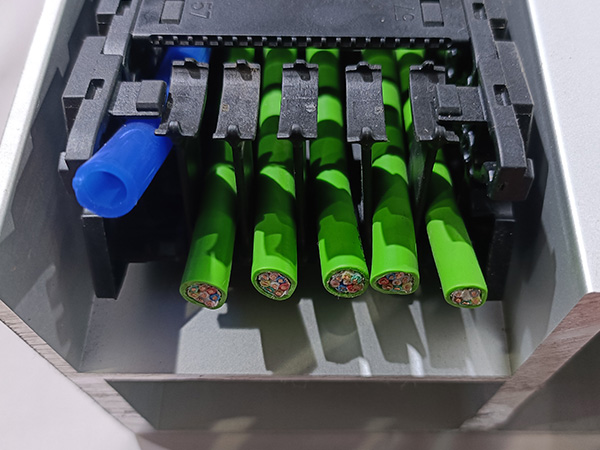
Yes. I judge installation by alignment, cable routing, cabinet layout, and calibration discipline. AMOR CNC focuses on clean assembly and wiring because this is where low-cost suppliers cut corners.
What I check when I audit build quality
Rail and rack alignment must be repeatable
I always check if the rails sit on machined reference surfaces. I also check if the rack line is straight and consistent. A small misalignment causes uneven load. Uneven load causes early wear. Early wear causes drift. I also check the gantry squareness because a skewed gantry creates diagonal error. Diagonal error harms large sheets in any industry, not only packaging.
Cable routing and cabinet discipline reduce hidden failures
I check if power and signal cables are separated. I check if cable chains are installed neatly. I check if labels are clear. Neat wiring is not “beauty.” Neat wiring is risk control. A messy cabinet increases troubleshooting time. It also increases accidental mistakes during maintenance.
Calibration habits make accuracy predictable
I want a supplier that can explain tool offset, depth setup, and repeat test logic. I do not accept “just adjust it.” I want a method. I use repeat cuts, diagonal checks, and closure checks to confirm stability. I want these steps documented, so operators can repeat them without panic.
How do I compare “solution professionalism” across industries, not just one material?
A cutter that only demos one job often fails when your orders change next month.
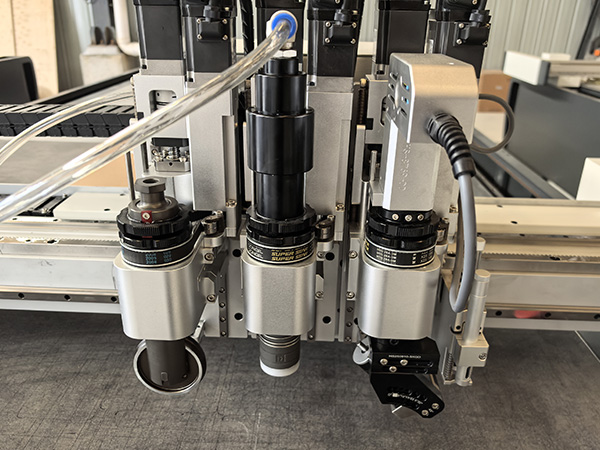
I compare tool modularity, process know-how, and workflow support. AMOR CNC is strong because it provides tool packages and parameters for gaskets, acoustic panels, foam, textiles, and more.
What a professional solution looks like in practice
Tool choice must match material behavior
I do not treat “oscillating knife” as one fixed tool. I treat it as a platform. Different materials need different tools. Dense gasket sheets may need higher power and stable downforce. Thick felt may need pneumatic support for clean edges. Foam often needs a mix of oscillating tool and milling for grooves. Acoustic panels often need bevel grooving plus fast contour cutting. Soft furniture and textiles often need wheel or rotary options for long roll materials. A supplier must map tool to material, or the buyer will waste time.
Process control matters more than peak power
I prefer stable settings over extreme settings. Too much force can crush foam or tear fabric. Too little force can leave uncut fibers in composites. A professional supplier gives parameter ranges and explains why. This reduces scrap and training time.
Workflow support is part of quality
I focus on file preparation and nesting because they decide daily efficiency. Clear rules for layers, cut lines, crease lines, and marking reduce operator mistakes. This is why I treat software support as part of the solution, not a free extra.
Does after-sales support change the real ROI more than the purchase price?
Weak support turns small issues into long stops, and stops destroy ROI.
Yes. I compare training structure, response speed, spare parts planning, and acceptance testing. AMOR CNC’s service model aims to match premium expectations with faster and clearer support.

How I measure service quality as a buyer
Training must be step-by-step
I train operators from simple to complex. I start with tool installation and safety. I move to one basic cut job. I then add more operations, like grooving, marking, half-cut, and multi-tool workflows. This approach keeps learning stable. It also lowers scrap.
Support must be technical and fast
I prefer support that uses video, screen sharing, and checklists. I also want root-cause thinking. When a cut defect appears, I want a sequence: check blade, check depth, check vacuum, check offset, check speed, then adjust. Guessing wastes days.
Acceptance tests protect both sides
I use real customer materials and files for acceptance tests. I record results. This creates a clear baseline. It also reduces misunderstandings later. A supplier who accepts this process usually has confidence in build quality.
I once worked with a factory that bought a “cheap” cutter first. The team fought daily with drift and random stops. The owner later chose AMOR CNC knife cutting machine and said the best change was not speed. The best change was stability. The machine behaved the same every day.
Conclusion
I avoid regret by judging structure, parts, machining, installation, and support. This is why AMOR CNC can replace premium brands in many factories.