
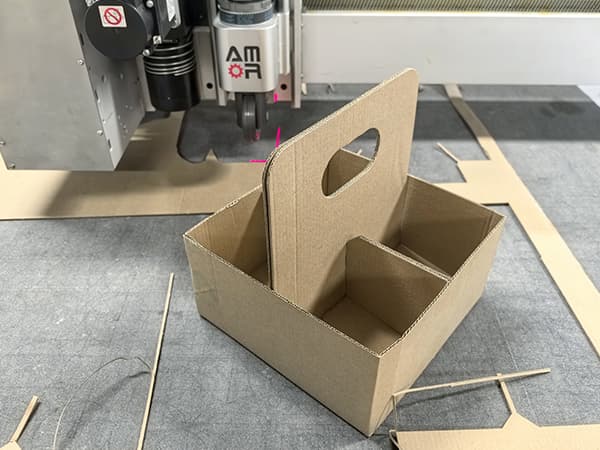
Manual samples feel “cheap” until you count the hours, rework, and waste.
Short-run packaging wins on ROI when you need speed, revisions, and many SKUs, because digital cutting removes die cost and delays while keeping results consistent.
Before you go deeper, I want you to pause for one reason. Many buyers keep reading because they hope for a magic machine number. I do not sell magic. I sell predictable math. If you only need one idea, stop here: you must compare total process cost, not the “tool cost.” Now, if you want the full ROI logic, keep going. If you do not plan to track time, scrap, and revision cycles, you can stop reading now.
What does manual cutting really cost in short-run packaging?
Manual cutting looks fast, but it keeps stealing time every single day.
Manual cutting costs more than it seems because labor time grows with every revision, and human consistency drops when orders become mixed and urgent.
What I count as “manual cost”
I always start with what people forget. I do not only count the operator’s cutting time. I count the full chain. A worker must print the dieline. A worker must tape it on the board. A worker must measure and mark. A worker must cut. A worker must crease. A worker must fold and test. A worker must fix mistakes. A worker must do it again when the customer changes one flap by 3 mm. Each step has minutes. Minutes become hours. Hours become missed shipping windows.
Why manual work becomes unstable in mixed orders
I see the same pattern in packaging shops. The first sample of the day looks fine. The fifth one looks “almost fine.” Then a rush order arrives. The operator changes blades, changes rulers, changes boards, and changes focus. A small error happens. The box looks okay on the table, but it fails in assembly. The team blames the board. The real cause is process drift. A digital cutter does not get tired. A digital cutter repeats the same path.
A simple manual cost example I use
I often use this quick test. I ask one operator to make 10 different carton samples in one day, each with a small change. I ask the operator to record time for each. I also ask the operator to record scrap pieces. In most shops, time rises after the third sample. Scrap also rises. This is why I say manual work is “cheap” only in the first hour. It is expensive in the full week.
When do traditional dies still make financial sense?
Dies are not “old.” They are just rigid tools that need stable demand.
Traditional dies make sense when the design is fixed, the volume is high, and the cost of delay is low compared to the cost per piece savings.
Dies win when the design does not change
I respect die cutting. A good die with a good press can run very fast. A die can also give strong crease quality on the right board. But a die needs stability. If the customer changes the box size often, the die becomes a tax. If the customer runs many SKUs, the die wall becomes a storage problem. If the customer wants “one more revision,” the die becomes a delay.
Dies lose when approvals drive the schedule
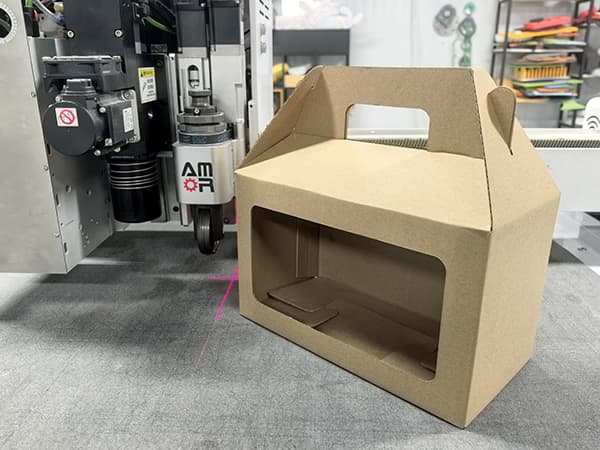
In custom packaging, customer approval is often the real bottleneck. The buyer wants to see a physical sample. The buyer asks for a change. The buyer shares new artwork. The buyer asks for a window, then removes it, then adds a handle. A die cannot follow that loop fast. A digital cutter can follow that loop in the same day.
Hidden die costs that buyers skip
Many people only count die price. I count these too:
- The time to build and ship the die
- The time to mount and test the die
- The scrap during die setup
- The cost of storing and tracking dies
- The cost of replacing worn rules
- The risk of losing the die or damaging it
A die becomes profitable when the order stays stable long enough. If you run short runs, the “stable long enough” condition often fails.
Why does an oscillating knife cutter improve ROI in carton sampling?
Digital cutting turns revision cycles into a normal routine, not a painful event.
An oscillating knife cutter improves ROI because it removes die cost, cuts setup time, and keeps accuracy stable across many box designs, even in small batches.
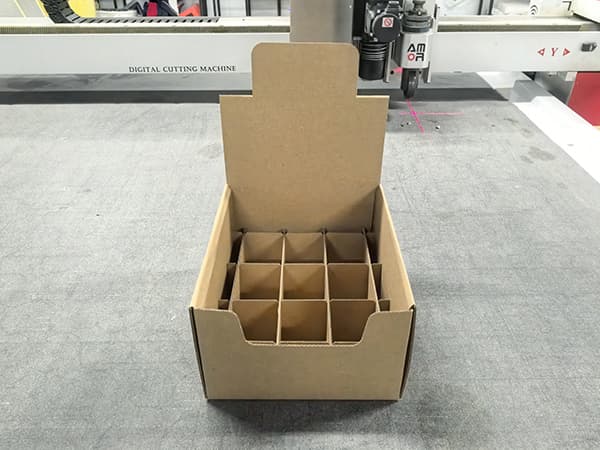
What I mean by “digital carton sampling”
When I say digital sampling, I mean this workflow. I import a dieline file. I set cut lines and crease lines. I place the board on the table. I start cutting. The machine cuts the outline. The machine makes crease lines using a creasing tool or a controlled scoring method. Then I fold and test. If the buyer wants a change, I edit the file and cut again. I do not wait for a die. I do not rebuild a jig. I do not restart the whole process.
Where the ROI really comes from
The ROI is not only in cutting speed. The ROI comes from reduced non-cutting time. Manual sampling has many “dead minutes.” A worker searches for tools. A worker aligns the printed template. A worker checks size again. A worker fixes the corner that did not close. Digital cutting reduces this overhead. A CNC table also keeps the board stable, so the cut stays consistent.
A short personal story
I once worked with a packaging team that made small runs for cosmetics. The team had many designs and weekly changes. The owner told me the cutters were “fast.” He was right for one design. He was wrong for ten designs. I asked him to time the full day. He found that cutting was only part of the job. The rest was measuring and fixing. After the switch to digital cutting, the team stopped arguing about who made the mistake. The file became the source of truth. He told me he felt calmer, because delivery became more predictable. You can replace this story with your own customer case later.
Which cost factors matter most in ROI: labor, waste, or time-to-approval?
Most buyers look at machine price first. I look at delay cost first.
For short-run packaging, time-to-approval often drives ROI more than pure labor cost, because faster approvals reduce rework, scrap, and missed delivery dates.
Labor cost is obvious, but it is not the full picture
Labor cost is easy to see. You pay wages. You see overtime. But labor is not the only cost. When you miss a deadline, you may lose a client. When you deliver a bad sample, you may lose trust. When you need three rounds of samples, you may lose margin. These losses do not show on the cutting table, but they show in your monthly profit.
Waste cost is a silent profit killer
I often see waste in two forms. The first form is scrap board from wrong cuts. The second form is wasted time because operators slow down to avoid scrap. Both forms hit profit. A stable digital process reduces scrap. It also allows operators to work with confidence, because the machine follows the file.
Time-to-approval is the “CEO cost”
If you run custom packaging, approvals are the real engine of revenue. Faster approvals mean you start production sooner. Faster approvals mean you can accept more jobs. Faster approvals mean you can promise shorter lead time. This is why I call time-to-approval the “CEO cost.” It is not a workshop detail. It is a business growth lever.
How do I calculate ROI for a box sample maker in 10 minutes?
ROI should be simple enough to fit on one page.
I calculate ROI by comparing weekly sample output, hours saved, and avoided die costs, then I subtract operating costs to estimate payback time in months.
Step 1: Define the work you really do
I write down three numbers:
- How many samples you make each week
- How many unique SKUs you touch each week
- How many revision rounds you usually do
If you do not know, I do a one-week time log. One week is enough to reveal patterns.
Step 2: Convert time into money without overthinking
I use a simple model. I multiply total sampling hours by a loaded labor rate. I include basic overhead. I do not need perfect accounting. I need consistent assumptions. Then I estimate how much time a digital workflow can remove. I do not claim a fantasy number. I use a conservative number.
Step 3: Add “avoided dies” as a clear bucket
If you build dies for samples or short runs, this bucket is direct savings. I list how many dies you buy per month and the average cost. Then I list how many of those dies could be removed if you cut digitally. Even if you keep dies for mass production, digital cutting can still remove dies for prototyping and short runs.
Step 4: Add the value of speed as capacity
When sample cycles get shorter, you can accept more jobs. I convert speed into capacity. I estimate how many more quotes you can finish, how many more samples you can deliver, and how many more orders you can win. I keep this number conservative. I prefer under-promising and over-delivering.
Step 5: One real scenario
Here is a simple scenario you can edit later. A shop makes 40 samples per week. Each sample takes 45 minutes by hand on average, including measuring, cutting, creasing, and fixes. That is 30 hours per week. If digital cutting reduces this to 15 hours, the shop saves 15 hours weekly. Over 4 weeks, that is 60 hours. If the shop also avoids a few sample dies per month, payback becomes much faster. I keep the model simple so the buyer can trust it.
Conclusion
Short runs reward speed and flexibility, so digital cutting often beats manual work and dies on total cost and predictable delivery.