
Rough edges and slow cutting waste panels and patience.
I see it often, and I know why it happens.
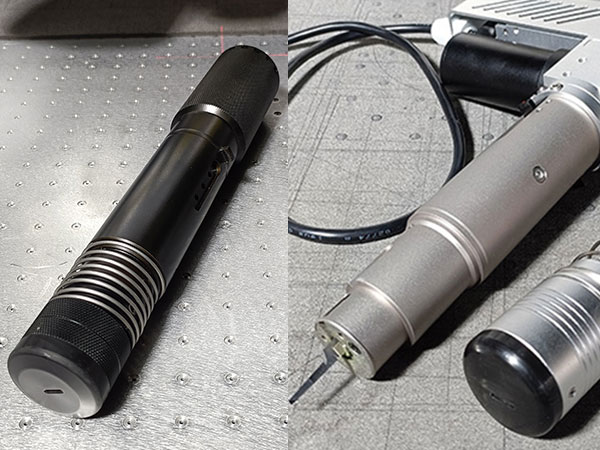
For 9–24 mm polyester fiber acoustic panels, I use an electric oscillating tool for faster cutting and smoother edges, and it does not need 0.6 MPa compressed air, so the running cost is lower. For 30–50 mm felt acoustic panels, I use a pneumatic oscillating tool because its larger amplitude keeps thick cutting stable and reduces blade damage.
I want you to stop guessing based on “tool power” words on a brochure.
If you keep reading, I will give you a simple selection logic that works on real acoustic panel jobs, not on sales slogans.
Are You Cutting PET Polyester Panels or Thick Felt Boards?
Many buyers tell me, “We cut acoustic panels.”
I always answer, “Yes, but which type and which thickness?”
Acoustic panels are not one material. Polyester fiber panels (PET felt boards) in 9–24 mm behave very differently from thick felt boards in 30–50 mm. PET boards are stiffer and more uniform. Thick felt boards are softer and more elastic. The tool needs to match this behavior, or the blade will pull fibers, compress the material, and create a rough edge.
I use a simple rule: I choose the tool that keeps the cut stable at production speed while protecting the blade. Electric oscillating tools usually win on mid-thickness PET boards because they cut fast and clean with a controlled motion. Pneumatic oscillating tools usually win on thick felt because they bring stronger downforce and a larger stroke, so the blade does not struggle inside the material.
Why Thickness Changes Everything
I like visual thinking, so I use this quick “risk bar” to show what changes as thickness goes up.
Thickness range (mm)     Best tool match          Stability risk
9–12   ███               Electric oscillating     Low
12–24  ██████            Electric oscillating     Controlled
24–30  █████████         Depends on density       Medium
30–50  ██████████████    Pneumatic oscillating    Low (with correct blade)
This is not theory. This is what I see when customers run full sheets all day.
Do You Want the Smoothest Edge on 9–24 mm Panels?
Many factories want the same thing: smooth edges that look finished.
They also want speed that makes sense in production.
On 9–24 mm polyester fiber acoustic panels, the electric oscillating tool is usually my first choice. The reason is simple: the tool motion is stable, and the cutting action is clean. When the blade is sharp and the vacuum hold-down is correct, the edge looks neat, and the fiber fuzz is minimal.
I also like electric tools because they do not need compressed air. Many plants do not have a stable 0.6 MPa air supply at the machine location. Some plants have air, but the compressor is running all day, and the electricity cost quietly grows. If you can avoid the compressor for this job range, you cut your operating cost and remove one more failure point.
What I Focus On for Clean Edges
1) Blade choice and sharpness
I always start with a sharp blade and a stable blade holder. A dull blade drags fibers. A dragging blade creates fuzz. That fuzz makes the customer think the tool is wrong.
2) Cutting speed that matches material density
If the speed is too high on a soft panel, the blade can pull. If the speed is too low on a mid-density panel, the blade can rub. I balance speed and feed so the cut is fast but not aggressive.
3) Vacuum hold-down and underlay condition
A moving panel creates a messy edge even with the best tool. I keep the vacuum zones active and the underlay flat. I also replace worn felt underlay before it becomes a quality problem.
4) Tool path settings for corners
Most edge defects appear on corners and small radii. I slow down on curves and corners when the geometry is tight. That small change often fixes the “hairy edge” complaint.
Are You Paying for Compressed Air Without Real Benefit?
Many buyers compare tool prices and forget the daily running cost.
I do not like hidden costs because they surprise production managers later.
A pneumatic oscillating tool typically needs compressed air around 0.6 MPa as a stable power source. That usually means a compressor, air dryer, filters, and stable air lines. Even if you already have a compressor, the machine still consumes air, and the compressor consumes electricity. It also adds noise and maintenance.
If your main products are 9–24 mm polyester fiber acoustic panels, you often do not need that extra air system. An electric oscillating tool can do the job with great quality and higher speed. That is why I often recommend electric tools for this range. The factory can save the compressor purchase cost or at least reduce compressor load.
A Simple Cost Logic Buyers Understand
I keep this comparison very direct. I am not writing a finance paper. I am preventing surprises.
| Cost item | Electric oscillating tool | Pneumatic oscillating tool |
|---|---|---|
| Extra power system | No compressor needed | Needs stable 0.6 MPa air system |
| Daily energy use | Mainly machine power | Machine power + compressor power |
| Maintenance points | Fewer | More (air filters, dryer, leaks) |
| Best value thickness | 9–24 mm | 30–50 mm |
If the buyer wants the lowest operating cost on PET boards, electric usually wins.
Are You Cutting 30–50 mm Felt Panels Without Destroying Blades?
Thick felt panels look easy until you cut them all day.
Then blade wear becomes your real KPI.
When thickness reaches 30–50 mm, the cutting load changes. The blade travels deeper inside a soft, elastic structure. If the tool stroke is small and the downforce is not strong enough, the blade starts to struggle. That struggle increases friction. More friction means higher blade temperature and faster wear. It also means the cut starts to drift, and the edge becomes inconsistent.
This is where the pneumatic oscillating tool shows its value. It usually provides a larger oscillation amplitude and strong cutting action. That larger stroke helps the blade “bite” and release fibers more effectively. The cut stays stable, and the blade survives longer. In real production, this stability is more valuable than a small speed advantage.
Why Pneumatic Tools Protect Blades on Thick Felt
1) Larger amplitude reduces blade sticking
A bigger stroke helps the blade move through thick fibers. The blade does not rub in the same way, so wear slows down.
2) Better penetration stability
Thick felt can compress. A pneumatic system can keep the cut action stable during compression changes.
3) Less chance of blade bending or chipping
When the tool action is stable, the blade does not fight the material. That reduces sudden stress spikes that can damage the blade.
I also tell customers one truth: if you cut 40 mm felt with the wrong tool, you will pay for it in blades.
Do You Need Speed, or Do You Need Stable Quality at Speed?
Many buyers say, “I want faster cutting.”
I always ask, “Do you want faster cutting, or do you want stable quality at fast speed?”
A tool can run fast for two minutes in a demo. Production is different. Production means eight hours, repeat orders, and new operators. This is why I match the tool to the thickness range and quality risk.
For 9–24 mm PET panels, electric tools usually deliver both speed and clean edges. For 30–50 mm felt, pneumatic tools usually deliver stable cutting and lower blade break risk. If you pick the wrong tool, you might still cut, but you will lose money on rework, scrap, and blades.
My Practical Selection Table (What I Send Buyers)
| Material type | Thickness | My first choice | Why it works |
|---|---|---|---|
| Polyester fiber (PET) acoustic panel | 9–12 mm | Electric oscillating tool | Fast, smooth cut, low running cost |
| Polyester fiber (PET) acoustic panel | 12–24 mm | Electric oscillating tool | Stable at speed, clean edge, no air needed |
| Dense PET / special laminated panel | 24–30 mm | Case-by-case | I test density and edge requirement |
| Felt acoustic panel | 30–50 mm | Pneumatic oscillating tool | Large amplitude, stable penetration, less blade damage |
This table is simple, but it prevents most wrong purchases.
Are You Choosing a Tool… or Choosing a Production System?
Many factories buy a machine and then fight daily problems.
I prefer to build a stable system from day one.
A good acoustic panel cutting solution includes more than the tool. It includes vacuum zoning, a flat table, a stable gantry, and simple software that operators can learn. If you combine the correct tool with a stable machine, you get repeatable edge quality.
I also like dual-tool configurations for acoustic panel production. One tool can cut. One tool can groove. This avoids manual tool changes and reduces human error. In my experience, the fastest factories are not the factories with the “fastest tool.” They are the factories with the smoothest workflow.
A Simple Workflow That Improves Output
1) Confirm material and thickness (9–24 or 30–50)
I never skip this step.
2) Select tool based on thickness and edge requirement
I choose electric for PET boards, pneumatic for thick felt.
3) Run a small test file with real shapes
I test straight lines, circles, and tight corners.
4) Lock the process and train operators
I keep settings stable and train step-by-step.
When you treat it like a system, quality becomes predictable.
Conclusion
I use electric tools for 9–24 mm PET panels and pneumatic tools for 30–50 mm felt to keep edges clean, speed stable, and costs under control.